Frost-Free vs Manual-Defrost Freezers
A frost-free freezer cycles a small heater on and off to keep ice from building up, so you never have to defrost it, while a manual-defrost freezer relies on you to empty it and melt the ice a few times a year. Frost-free wins on convenience and reaches the temperature you set faster after the door opens; manual-defrost tends to run quieter, hold a slightly steadier deep-cold, cost less up front and protect long-term storage better. Pick frost-free if you open the door often and hate maintenance; pick manual-defrost if you stock food for the long haul and want the lowest noise and price.

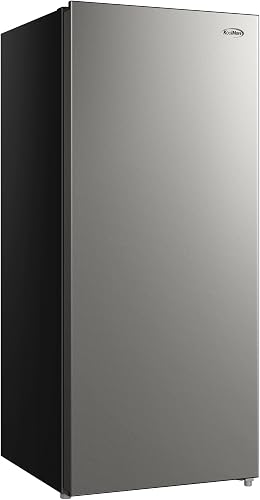

How a frost-free freezer works
A frost-free (also called auto-defrost) freezer fights ice automatically. On a timer or sensor cycle, a small heating element near the evaporator coils warms up briefly, melts any frost that has formed, and drains the water away. A fan then circulates the cold air back through the cabinet. Because the air keeps moving, frost never gets a chance to coat the walls or bury your food. You get a freezer you never have to scrape out, which is why most full-size upright freezers and the freezer side of refrigerators use this method.
How a manual-defrost freezer works
A manual-defrost freezer has no heater or circulation fan. It cools by letting cold air sit still around static coils, so over weeks and months a layer of frost slowly thickens on the interior walls. When that buildup gets too heavy it starts to insulate the coils and steal space, so you unplug the unit, move the food to a cooler, and let the ice melt before wiping it dry and powering back up. Most chest freezers and many compact upright freezers work this way, trading a bit of upkeep for simpler, sturdier mechanics.
Defrosting and maintenance
This is the clearest difference between the two. A frost-free model is genuinely hands-off: open it, fill it, forget it. A manual-defrost model needs to be emptied and thawed whenever frost builds up past roughly a quarter inch, which for most households lands somewhere between once and a few times a year depending on humidity and how often you open the door. The chore takes a couple of hours and you need somewhere cold to park the food while it runs, so plan to do it when stock is low. If the idea of that routine bothers you, frost-free is the safer choice.
Energy use
Frost-free units use a little more electricity because the defrost heater and the circulation fan both draw power, and the heater fights against the cooling it just did. The gap is usually modest on modern, well-insulated freezers, especially ENERGY STAR certified ones, but over a decade it adds up. A manual-defrost freezer has fewer moving parts pulling power, so it tends to run leaner, on one condition: a thick coat of frost insulates the coils and forces the compressor to work harder, which quietly erases that efficiency edge. Keeping a manual unit reasonably frost-free is what actually keeps it cheap to run.
Freezer burn and long-term storage
If you buy in bulk or stock a chest freezer for months, this matters. The fan in a frost-free freezer keeps moving dry air across your food, and that constant airflow pulls moisture out of anything not tightly sealed, which is exactly what causes freezer burn and ice crystals on the surface. A manual-defrost freezer keeps the air still, so well-wrapped or vacuum-sealed food holds its quality noticeably longer. For a freezer you open weekly, the difference is small; for a deep-storage freezer in the garage, manual-defrost is the gentler home for long-term food.
Noise
A manual-defrost freezer is the quiet one. With no fan whirring and no defrost cycle kicking in, it mostly just hums when the compressor runs and stays silent the rest of the time. A frost-free model adds the sound of the circulation fan plus the occasional tick and trickle of a defrost cycle, which can be noticeable in a kitchen, a finished basement, or anywhere you spend time nearby. If the freezer lives in a quiet living space rather than a garage or utility room, the manual-defrost hum is easier to live with.
Price
Manual-defrost freezers are generally cheaper to buy because the design is simpler, with no heater, fan, sensors, or defrost timer to build in. Frost-free models cost more up front for the convenience they deliver. The price gap is widest in the budget and mid-size range and narrows on larger premium upright freezers, where frost-free is often standard. Weigh the higher sticker against the years of skipped defrosting chores, then check current pricing on Amazon before you decide, since it shifts often and we never quote a fixed number here.
How to choose
Match the method to how you will actually use the freezer. Choose frost-free if it lives indoors, you open it often, you store food short to medium term, and you simply do not want a maintenance chore on the calendar. Choose manual-defrost if you want the lowest price and the quietest operation, you are doing long-term or bulk storage where freezer burn is the enemy, or the unit will sit in a garage or basement where a yearly thaw is no big deal. Capacity and where it will sit usually decide more than the defrost type alone, so size the space first, then pick the method that fits your patience and your storage goals.
Common mistakes to avoid
- Assuming frost-free means zero upkeep forever, when the fan and heater still add running cost and a touch of noise you should plan around.
- Letting a manual-defrost freezer ice over heavily before defrosting, which insulates the coils, wastes space, and quietly drives the electric bill up.
- Buying frost-free for long-term bulk storage, then losing food quality to freezer burn because the moving air dries out anything not tightly sealed.
- Putting a frost-free unit with its fan and defrost cycle in a quiet living space, when a near-silent manual-defrost model would have been the better fit.
- Picking the defrost type before sizing the space and capacity you actually need, then ending up with the wrong fit for the room.
Frequently asked questions
Do I ever have to defrost a frost-free freezer?
No. A frost-free freezer runs its own defrost cycle automatically, melting and draining any frost before it builds up, so you never have to empty it and thaw it yourself.
How often do I need to defrost a manual-defrost freezer?
Defrost it whenever frost on the walls passes roughly a quarter inch thick. For most households that is somewhere between once and a few times a year, depending on humidity and how often the door is opened.
Which type is cheaper to run?
A manual-defrost freezer is usually leaner on electricity because it has no defrost heater or fan, but only if you keep frost from building up. A thick frost layer insulates the coils and erases that advantage. Frost-free models draw a bit more by design, and an ENERGY STAR certified one keeps that gap small.
Is frost-free or manual-defrost better for long-term storage?
Manual-defrost is gentler on food stored for months because its still air does not dry out your food the way a frost-free unit's circulating air can, which is what causes freezer burn. For a freezer you open often, the difference is minor.