Kegerator vs Keezer: Which Should You Build or Buy?
A kegerator is a purpose-built refrigerator with a tap, ready to pour out of the box, while a keezer is a chest freezer converted into a keg dispenser using an added temperature controller. Buy a kegerator if you want a finished appliance and a clean footprint; build a keezer if you want more keg capacity for the money and don't mind a weekend project.


What a kegerator is
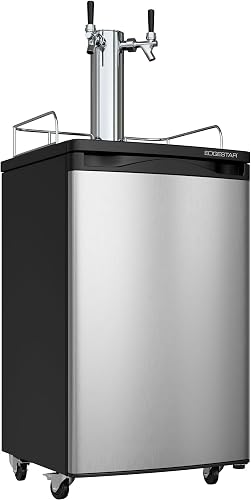
A kegerator is a compressor refrigerator designed from the start to hold and dispense kegs. It arrives with the cabinet, a CO2 regulator mount, beer lines, a tower or tap, and a temperature dial already set up for serving temperatures. You roll a keg in, hook up the gas and line, and pour. Because it is engineered as one product, the door seals, drip tray, and tower are sized to match the interior, and nothing has to be modified. That finished, plug-and-pour nature is the main reason people choose one over a homemade rig.
What a keezer is
A keezer is a chest freezer that has been converted into a keg dispenser. A chest freezer alone would freeze your beer solid, so the build hinges on an external temperature controller that switches the freezer on and off to hold a fridge-like serving temperature instead of a freezing one. Builders typically add a collar of wood around the lid opening to raise the height, mount taps or a tower through that collar, and run gas lines inside. The freezer keeps doing the cooling; the controller and collar turn it into a dispenser. It is the classic do-it-yourself answer when you want capacity without paying for a finished appliance.
Keg capacity: how many kegs each holds
Capacity is where the two diverge most. A typical home kegerator is built around one full-size keg, with some models accommodating two smaller kegs or adding a second tap. The Kegco K309SS-1, for example, is a 5.6 cubic foot single-tap freestanding unit sized for that one-keg lifestyle. A keezer wins on raw room: a chest freezer's wide, flat interior often swallows several kegs side by side plus the CO2 tank inside the cabinet, which is why homebrewers running multiple beers at once gravitate to the keezer route. If you only ever pour one beer at a time, the kegerator's capacity is plenty; if you want three or four taps, a keezer is the easier path to that.
Cost: buying versus building
A ready-made kegerator is a single line-item purchase. Entry models such as the EdgeStar BR3002BL sit at the lower end, while a stainless freestanding unit like the Kegco K309SS-1 runs higher, so you can budget the whole appliance in one number. A keezer's price is harder to pin down because it is a sum of parts: a chest freezer, a temperature controller, the wood and hardware for the collar, taps, lines, a CO2 regulator, and the gas tank. Builders often land cheaper per tap than buying a multi-tap kegerator, especially if the freezer is bought used, but the savings shrink once you count tools and the value of your time. Never assume a keezer is automatically cheaper until you've priced every component.
DIY effort and skill
This is the cleanest dividing line. A kegerator requires almost no building: assemble the tower if needed, connect gas and beer lines, set the dial. A keezer is a genuine project. You'll measure and cut a collar, seal it to the freezer, drill the tower or shanks, wire or plug in a temperature controller, and leak-test the whole system. None of it is advanced, but it takes a weekend, some basic tools, and a willingness to troubleshoot. Choose the kegerator if you want beer flowing the day it arrives; choose the keezer if the build itself is part of the appeal.
Temperature control and stability
A kegerator's thermostat is calibrated for serving beer, so it holds a steady cold pour without any extra gear. A keezer relies entirely on the add-on controller to keep a freezer from freezing the beer; get the controller right and a chest freezer's heavy insulation actually holds temperature very stably and efficiently. The trade-off is that the keezer's stability is only as good as the controller you install and how well you set it, whereas the kegerator handles that for you out of the box.
Space and footprint: how to choose
Footprint often decides it. A kegerator is tall and narrow with a small floor footprint, so it tucks into a kitchen, bar nook, or man cave like any compact fridge and can be moved on its casters. A keezer is low and wide, demanding clear floor space and overhead room to lift the lid; it suits a garage, basement, or dedicated bar area more than a tight kitchen. To choose between them, weigh three things in order: how many beers you want on tap at once, where the unit will live, and whether you'd rather buy a finished appliance or build one. One tap in a kitchen points to a kegerator; several taps in a garage points to a keezer.
Common mistakes to avoid
- Assuming a keezer is always cheaper. Once you add a temperature controller, collar materials, taps, lines, regulator, and a CO2 tank, the total can approach the price of a ready-made kegerator.
- Running a chest freezer as a keezer without a temperature controller. A freezer left on its own setting will freeze the beer; the external controller is the part that makes the conversion work.
- Buying a single-tap kegerator when you actually want multiple beers on tap. If you plan to pour three or four styles at once, plan for that capacity up front rather than outgrowing a one-keg unit.
- Underestimating the keezer footprint. People size for the kegs and forget they need clear floor space plus headroom to open the lid.
- Ignoring CO2 tank placement. A kegerator usually mounts the tank externally, while many keezers keep it inside, which changes how much usable keg room you really have.
Frequently asked questions
Is a keezer cheaper than a kegerator?
It can be, particularly per tap if you start with a used chest freezer, but not automatically. Add up the freezer, temperature controller, collar materials, taps, lines, regulator, and CO2 tank before comparing; a fully built keezer often lands close to the cost of a finished kegerator.
Can I turn any chest freezer into a keezer?
Most standard chest freezers can be converted, but the build always needs an external temperature controller so the freezer holds a serving temperature instead of freezing the beer. Check that the interior is wide enough for the number of kegs you want plus the CO2 tank.
Which holds more kegs, a kegerator or a keezer?
A keezer usually holds more. Home kegerators are typically built around one full-size keg, while a chest freezer's wide interior can fit several kegs side by side, which is why multi-tap homebrew setups favor the keezer.
Should a beginner build a keezer or buy a kegerator?
If you want beer on tap with minimal effort, buy a kegerator and you can pour the day it arrives. Build a keezer if you want more capacity, enjoy a weekend project, and are comfortable cutting a collar and wiring a temperature controller.