Thermoelectric vs Compressor Wine Coolers
A thermoelectric wine cooler runs quietly and sips power but relies on a cool, stable room and works best for small collections. A compressor wine cooler pulls colder and holds temperature even in a warm or variable room, which suits larger collections and tougher spots, at the cost of a faint hum and slightly higher energy use. Choose thermoelectric for a climate-controlled kitchen and a dozen or so bottles; choose compressor for a garage, a sunny room, or a cabinet you want to keep filled.


How each type cools
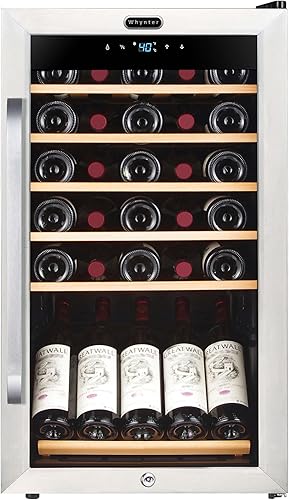
The two cooler types reach the same goal by very different means. A thermoelectric cooler uses the Peltier effect: passing current through a solid-state plate moves heat from inside the cabinet to a heat sink and fan on the back, with no refrigerant and no moving compressor. A compressor cooler uses the same vapor-compression cycle as a standard refrigerator, circulating refrigerant through a compressor and coils to actively pump heat out. The practical difference is muscle. Thermoelectric cooling can only push the interior a fixed number of degrees below room temperature, so its floor follows the room. A compressor sets its own target and drives toward it regardless of the surroundings, which is why most mid-size and large coolers, like the Whynter FWC-341TS, use one.
Noise and vibration
This is where thermoelectric wins outright. With no compressor cycling on and off, a thermoelectric unit such as the BLACK+DECKER BD60026 produces only the soft whir of a small fan, so it is easy to live with in a kitchen, dining room, or home office. It also creates almost no vibration, which some collectors prefer for bottles meant to rest undisturbed. A compressor cooler is louder because the compressor kicks in periodically with a low hum and a faint mechanical vibration. Quality units damp this well, but if the cooler will sit a few feet from where you work or sleep, the thermoelectric difference is noticeable.
Performance in different room temperatures
Where the cooler lives often decides the question for you. Because a thermoelectric unit can only cool a set amount below ambient, a hot summer kitchen or an unconditioned garage can leave it unable to reach proper wine-serving temperatures. A compressor cooler is far less sensitive to the room and will hold its set point in warm or swinging conditions, which is why it is the safer choice for garages, sunrooms, and anywhere that crosses into the 80s. If your storage spot stays cool and steady year-round, thermoelectric performs reliably; if it gets warm or fluctuates, lean compressor.
Capacity
Capacity tracks closely with cooling type. Thermoelectric coolers are almost always small, in the range of a handful to a couple dozen bottles, because the technology struggles to cool a large, frequently opened cabinet. The compact BLACK+DECKER BD60026 is a typical thermoelectric size. Once you move past roughly two dozen bottles, the market is essentially all compressor, since only active refrigeration can keep a tall, full cabinet evenly cold. The 3.4 cubic foot Whynter FWC-341TS and the dual-zone Wine Enthusiast 131617 are compressor units sized for serious case buyers. If you want room to grow, that points you toward a compressor.
Energy use
Thermoelectric coolers generally draw less power than compressor models of similar size, since there is no compressor motor to start and run, and they are a reasonable pick if you want a small unit running constantly with minimal energy. The catch is efficiency under load: a thermoelectric cooler fighting a warm room can run continuously and still underperform, erasing the savings. A compressor cycles on and off as needed, so in a hot space it often does the job with less wasted effort. For a small cooler in a cool room, thermoelectric is the more frugal choice; in a warm room, a compressor is usually the smarter one.
Price
At the small end, thermoelectric coolers tend to be the most affordable way to chill a dozen bottles, which is part of their appeal for casual drinkers and first-time buyers. Compressor coolers usually cost more for a comparable bottle count because the refrigeration hardware is more complex, but they also span the entire size range up to large cabinets, so the price reflects capacity and capability as much as the cooling type. Rather than chasing the lowest sticker, match the cooler to your room and collection first, then compare prices among models that actually fit your needs.
How to choose
Decide based on three things in order: where it will sit, how many bottles you keep, and how sensitive you are to noise. If the spot is climate-controlled, you store a dozen or so bottles, and quiet matters, a thermoelectric unit like the BLACK+DECKER BD60026 is an easy, low-power fit. If the room runs warm or swings, or you want more than a couple dozen bottles, choose a compressor model such as the Whynter FWC-341TS, or the dual-zone Wine Enthusiast 131617 if you serve both reds and whites. When in doubt about the room, a compressor is the more forgiving choice.
Common mistakes to avoid
- Buying a thermoelectric cooler for a garage or hot kitchen, then finding it cannot reach proper wine temperatures because it can only cool a set amount below the room.
- Choosing on noise alone and putting an undersized thermoelectric unit where you really need the capacity and cooling power of a compressor.
- Assuming a compressor is always better and overpaying for one in a small, climate-controlled space where a quiet thermoelectric cooler would do the job for less.
- Ignoring where the cooler will live and picking on price first, instead of matching the cooling type to the room and the size of your collection.
Frequently asked questions
Is a thermoelectric or compressor wine cooler better?
Neither is better outright; it depends on your setup. Thermoelectric is quieter, uses less power, and suits small collections in a cool, stable room. A compressor cools harder and holds temperature in warm or variable rooms and larger cabinets, with a faint hum. Match the type to where the cooler will sit and how many bottles you keep.
Why is my thermoelectric wine cooler not getting cold enough?
A thermoelectric cooler can only pull the interior a fixed amount below room temperature, so a warm or sunny room limits how cold it can get. If the space regularly climbs into the 80s, the unit may run nonstop and still fall short. Moving it to a cooler spot helps; if you cannot, a compressor model is the more reliable choice.
Are compressor wine coolers loud?
They are louder than thermoelectric coolers because the compressor cycles on and off with a low hum and slight vibration, but well-built units keep it modest. If the cooler will sit close to where you work or sleep and you store only a few bottles, a quiet thermoelectric model like the BLACK+DECKER BD60026 may be the better fit.
Can a thermoelectric wine cooler go in a garage?
It is usually a poor match. Garages get hot and swing with the seasons, and a thermoelectric cooler cannot overcome a warm room, so it may never reach serving temperatures. For a garage, a compressor cooler such as the Whynter FWC-341TS is the safer choice because it holds its set point regardless of the surrounding temperature.