Top-Freezer vs Bottom-Freezer Refrigerators
Choose a top-freezer refrigerator if you want the simplest, lowest-cost layout and only dip into the freezer occasionally, and a bottom-freezer layout if you reach for fresh food far more often and want it at eye level. A compact top-freezer like the Frigidaire EFR753-PLATINUM keeps the price and footprint small, while a bottom-freezer-style french-door model like the LG LRFS28XBS puts the fresh-food shelves where you look first and tucks the freezer into a drawer below.
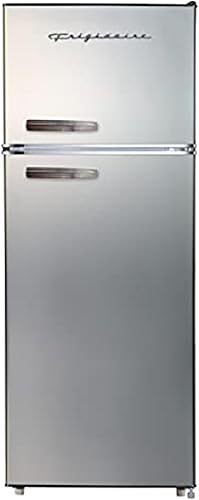

How the two layouts differ
The names describe where the freezer sits. A top-freezer refrigerator stacks a freezer compartment above the fresh-food section behind two doors, the long-standing layout you see in the 7.5 cubic foot Frigidaire EFR753-PLATINUM. A bottom-freezer design flips that, putting the fresh-food shelves up top and the freezer in a drawer or compartment underneath; french-door models are the most common bottom-freezer variant, with two upper doors over a freezer drawer, as in the 27.7 cubic foot LG LRFS28XBS. That single difference in stacking order is what changes how you reach for food every day.
Ergonomics and daily access
Most people open the fresh-food side far more than the freezer, and that is the case for bottom-freezer layouts. With the fridge shelves up high, your milk, leftovers and produce sit at or near eye level, so you bend down only when you actually need frozen food. A top-freezer reverses this: the freezer is the part at eye level, while the crisper drawers and lower shelves sit close to the floor and need more bending. If you cook from fresh food daily, a bottom-freezer feels easier on your back; if your freezer trips are frequent, a top-freezer keeps frozen items in easy view.
Capacity and organization
Top-freezer units are usually the more compact family, which makes them a natural fit for apartments, second kitchens and tight footprints; the Frigidaire here offers 7.5 cubic feet across three shelves behind two doors. Bottom-freezer and french-door models tend to scale up, like the LG at 27.7 cubic feet over four shelves with a wide upper compartment that swallows party platters and sheet pans. The freezer drawer on a bottom-mount layout is good for bulk storage but means digging down through stacked items, whereas a top-freezer keeps frozen food shallow and quick to scan. Match the capacity to how much fresh versus frozen food you actually store.
Price and footprint
Layout is one of the biggest drivers of price. Top-freezer refrigerators are typically the most affordable design, which the Frigidaire EFR753-PLATINUM reflects at its 329 dollar list price in a small 90 pound cabinet you can place almost anywhere. Bottom-freezer and french-door models carry more capacity and features, and they cost and weigh more; the LG LRFS28XBS lists near 1,940 dollars and weighs 292 pounds, so it needs a sturdy floor and a measured opening. Whichever layout you lean toward, confirm the current price and the doorway and installation clearance before buying, since both can change.
Energy and running cost
Both layouts use a standard compressor to cool the cabinet, so the bigger influences on running cost are size and defrost type rather than where the freezer sits. The compact Frigidaire uses manual defrost, meaning you periodically defrost it by hand but skip the energy a defrost heater would draw, which suits a small secondary fridge. The larger LG uses automatic defrost for hands-off convenience across its much bigger 27.7 cubic foot cabinet. As a rule, a smaller fridge costs less to run than a large one of either layout, so size your refrigerator to your real needs rather than buying more cold space than you will fill.
Who each layout suits
A top-freezer refrigerator suits renters, smaller households, garages and anyone who wants the lowest price, the smallest footprint and a simple two-door design they only occasionally open for frozen food; the Frigidaire EFR753-PLATINUM is a clear example. A bottom-freezer or french-door layout suits busy kitchens where fresh food comes first, where eye-level shelves and a wide upper compartment matter more than saving money or space, as with the LG LRFS28XBS. Decide by how often you reach for fresh versus frozen food, then let your budget and the available space confirm the choice.
Common mistakes to avoid
- Choosing a layout on price alone and ignoring that you open the fresh-food side far more than the freezer.
- Assuming a bottom-freezer drawer is as quick to scan as a shallow top freezer; bulk items can get buried.
- Buying a large bottom-freezer or french-door model for a small kitchen without measuring the doorway and floor space.
- Overlooking defrost type and capacity, which affect running cost more than where the freezer is mounted.
Frequently asked questions
Is a top-freezer or bottom-freezer refrigerator better for your back?
A bottom-freezer layout is usually easier on your back for everyday use, because the fresh-food shelves sit up high at eye level and you only bend down for the freezer. A top-freezer like the Frigidaire EFR753-PLATINUM puts the freezer at eye level instead, so you bend more often to reach the lower fridge shelves and crisper drawers.
Which layout is cheaper, top freezer or bottom freezer?
Top-freezer refrigerators are generally the most affordable layout. The compact Frigidaire EFR753-PLATINUM lists at 329 dollars, while a larger bottom-freezer-style french-door model such as the LG LRFS28XBS lists near 1,940 dollars, reflecting its much greater capacity and added features.
Does a top-freezer or bottom-freezer hold more food?
It depends on the model, not just the layout. Top-freezer units are often compact, like the 7.5 cubic foot Frigidaire, while bottom-freezer and french-door designs frequently scale much larger, such as the 27.7 cubic foot LG. Compare the listed capacity in cubic feet for the specific models you are considering.
Are bottom-freezer refrigerators harder to organize?
The freezer can be. A bottom-freezer drawer is good for bulk storage but means digging down through stacked items, whereas a top freezer keeps frozen food shallow and easy to scan. The trade-off is that bottom-freezer layouts make the fresh-food shelves easier to organize at eye level.