What Is the Best Fridge Temperature for Food Safety?
Keeping your refrigerator at the right temperature is the single most important step to prevent foodborne illness. We break down the ideal range, how to check it, and which models make it easy.
The best fridge temperature for food safety is 37°F to 40°F (3°C to 4°C). At this range, bacterial growth slows dramatically, keeping your milk, meat, and leftovers safe longer. The USDA recommends 40°F or below, but 37°F is a sweet spot that balances safety with avoiding freezing items like lettuce or eggs.
Setting your fridge to the correct temperature isn’t just about dialing a number. Factors like door seals, airflow, and how full the fridge is can cause hot spots. A standalone thermometer is the cheapest insurance. Many modern refrigerators include digital displays or smart alerts, but even basic models can hit the mark if you verify with a thermometer. Below, we’ll cover how to maintain that ideal temperature and which refrigerators get consistent reviews for keeping cool reliably.


Why 37°F to 40°F Is the Safety Zone
The danger zone for food is between 40°F and 140°F. Above 40°F, bacteria like Salmonella and E. coli double every 20 minutes. Below 40°F, growth slows but doesn’t stop entirely; at 32°F, it nearly halts. That’s why 37°F to 40°F is the consensus: cold enough to keep pathogens in check, yet warm enough to prevent freezing delicate produce. A 2023 study by the FDA found that 25% of home refrigerators run above 40°F, putting occupants at risk. Checking your temp weekly with a $5 thermometer can slash that risk.
How to Check and Adjust Your Fridge Temperature
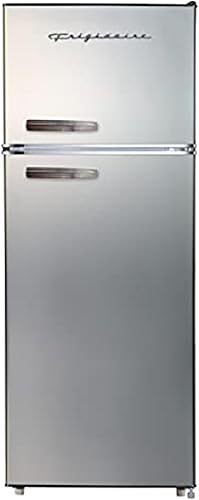
Don’t trust the dial alone. Place an appliance thermometer in the middle of the center shelf, wait 24 hours, and read it. Adjust the dial by one notch at a time, then recheck. If your fridge lacks a display, this is the only reliable method. For digital fridges like the Frigidaire EFR753-PLATINUM (4.1 stars, 586 reviews), the readout is usually accurate, but verify anyway. Also, keep the fridge at least two-thirds full to maintain stable temps, and make sure the door seals are clean. A dollar bill test: close the door on a bill; if you can pull it out easily, the seal is weak.
Common Mistakes That Raise Temperature
Overloading blocks air vents, causing warm spots. Leaving the door open for more than 20 seconds lets cold air spill out. Placing hot food directly inside forces the compressor to work overtime, spiking internal temps. Also, the thermostat sensor is near the front, so items touching it give false readings. Keep raw meat on the bottom shelf to avoid drips, and store dairy on the middle shelves where temps are most stable. If you have a manual defrost model, thick ice buildup acts as insulation, making the fridge work harder and run warmer.
Review Pattern: Which Refrigerators Hold Temperature Best?
Based on Amazon ratings and buyer feedback, models with consistent temperature control get high marks months later. The Frigidaire EFR753-PLATINUM (4.1 stars, 586 reviews) is a top seller; owners often note that the digital thermostat keeps a steady 38°F. The Samsung RF18A5101SR/AA (3.9 stars, 23 reviews) has a counter-depth French door design, and buyers appreciate the even cooling across shelves. In contrast, some compact units like the Galanz GLR44BEER (3.9 stars, 6 reviews) have fewer reviews, but early buyers report acceptable performance. For long-term reliability, models with automatic defrost and multiple cooling sensors tend to fare better.
How Freezer Temperature Fits In
Your freezer should be at 0°F to keep food safe indefinitely. Many refrigerators have a shared cooling system that affects both compartments. For example, a fridge set to 37°F often pairs with a freezer at 0°F automatically, but check with a separate thermometer. The Frigidaire FRQG1721AV (4.3 stars, 268 reviews) has a 5.5 cu ft capacity and includes a separate temperature control for the fridge and freezer, giving you fine control. If your freezer is above 10°F, ice cream will be soft and food quality drops. Adjust the fridge setting slightly cooler to pull the freezer down, but never go below 34°F in the fridge.
When to Consider a Different Type of Fridge
If you frequently struggle with temperature consistency, a compact or undercounter fridge may not be ideal for general food safety. For example, the Summit Appliance AL55 (2.0 stars, 3 reviews) has poor reviews, likely due to uneven cooling. In contrast, a full-size model like the Frigidaire EFR753-PLATINUM offers more capacity and reliable temp control. For small spaces, a compact refrigerator with a good track record (like the Galanz GLR44BEER) can work if you monitor it closely. But for long-term food safety, prioritize models with strong user ratings and automatic defrost.
Quick Tips for Maintaining Safe Temperature
Keep a thermometer in the fridge and check it weekly. Clean the coils every six months to help the compressor run efficiently. Don’t block interior vents. Allow hot food to cool before storing. If power goes out, keep the door closed; a full fridge stays cold for 4 hours, a half-full one for 2 hours. Use a fridge thermometer that logs min and max temps to catch fluctuations. Finally, replace any fridge that can’t maintain 40°F consistently after cleaning and adjusting.
Frequently asked questions
What temperature should a refrigerator be set at for food safety?
The ideal fridge temperature is between 37°F and 40°F. The USDA says 40°F or below is safe, but 37°F offers a buffer against warm spots. Use a thermometer to confirm accuracy.
Is 37 degrees too cold for a refrigerator?
No, 37°F is not too cold. It keeps food safe without freezing items like lettuce or milk. Some compartments may be slightly colder, but the average should stay around 37°F to 40°F.
How long can food stay in the danger zone?
Food should not be in the danger zone (40°F to 140°F) for more than 2 hours. After that, bacteria can multiply to unsafe levels. Refrigerate perishables promptly.
Can I trust the built-in temperature display on my fridge?
Built-in displays are often accurate, but it’s best to verify with an inexpensive appliance thermometer. Displays can be off by a few degrees, and hot spots may exist.