How Much Does It Cost to Run a Refrigerator (and a Second Freezer)?
A plain-math way to turn wattage and ENERGY STAR labels into dollars per year, so you can size up a fridge plus a backup freezer against your own electric rate.
If you are wondering how much it costs to run a refrigerator per year, the short answer for a typical modern full-size model is roughly $50 to $90 in electricity, while older or larger units can push past $120. Add a second freezer in the garage and you are usually looking at another $30 to $70 a year. The number that matters is your own, though, because it depends on two things you control: the unit's annual energy use and the price you pay per kilowatt-hour. This guide shows you the simple arithmetic to get a real figure before you buy, so a low sticker price never tricks you into a hungry machine.

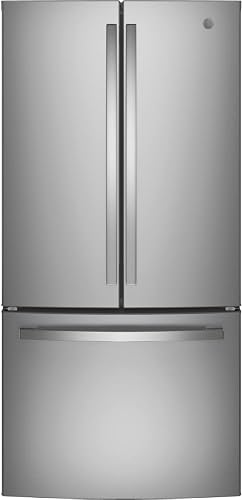

The only formula you need
Running cost comes down to one line of math: annual kilowatt-hours multiplied by your electric rate equals dollars per year. A kilowatt-hour (kWh) is one thousand watts running for one hour, and it is the unit your utility bills you on. So if a refrigerator uses 400 kWh in a year and you pay $0.16 per kWh, it costs about $64 a year to run. That is the whole trick. Everything else in this guide is just about finding those two numbers accurately, because the wrong rate or a guessed wattage can throw your estimate off by a wide margin.
Find your electric rate (it is on your bill)
Your rate is the price per kWh, and it is printed somewhere on your monthly electric statement, often labeled as a supply or energy charge in cents per kilowatt-hour. To get a fully honest number, take the total dollar amount of your bill and divide it by the total kWh used that month; this folds in delivery fees, taxes, and surcharges that a quoted rate leaves out. Many US households land somewhere between $0.12 and $0.30 per kWh, and the spread is huge depending on where you live. Because the rate is a direct multiplier in our formula, a home paying $0.28 will spend more than double a home paying $0.13 to run the exact same appliance. Always use your real rate, not a national average, before you compare models.
Where to find a fridge's energy use
Skip the marketing copy and look at the yellow EnergyGuide label or the manufacturer's spec sheet, which lists an estimated annual energy use in kWh per year. That figure already accounts for the compressor cycling on and off, the defrost cycle, and the door seals doing their job, so it is far more reliable than multiplying a nameplate wattage by 24 hours. If a listing only gives you running watts, do not assume the compressor runs nonstop; a fridge typically runs its compressor roughly a third of the time. When in doubt, the published annual kWh number on a current model is the figure to trust, and it is the same number ENERGY STAR uses for its comparisons.
What ENERGY STAR actually saves you
An ENERGY STAR label means a model meets a federal efficiency threshold and uses meaningfully less energy than a standard equivalent of the same size and style. In dollar terms the gap between an efficient new fridge and a tired ten-to-fifteen-year-old unit can be the difference between roughly 350 kWh and 700 kWh a year. At $0.18 per kWh that is about $63 versus $126, so the certified model can pay back part of its price purely on the meter. The label is not magic, though. A huge french-door model with an ice maker and a dispenser can still out-consume a small certified unit, so always compare the annual kWh number alongside the badge rather than treating the badge as the whole story. Browse certified options across our [refrigerators](#) hub when you are ready to compare real annual-use numbers.
Adding a second freezer to the math
A backup freezer in the garage or basement runs the same formula, just with its own annual kWh figure. A compact chest freezer is one of the cheapest appliances you can own to operate, often landing near 200 to 280 kWh a year, which is roughly $30 to $50 at typical rates. A larger frost-free upright costs more to run because the automatic defrost cycle uses extra energy, frequently landing in the 350 to 500 kWh range, or about $55 to $90 a year. Two trade-offs matter for the bill. A chest freezer holds cold better and usually wins on efficiency, while an upright is easier to organize but the manual-defrost-versus-frost-free choice swings the yearly cost noticeably. Weigh those numbers against your storage habits in our [chest-freezers](#) and [upright-freezers](#) silos before you decide.
A worked example: fridge plus a backup freezer
Say you run a modern full-size refrigerator rated at 420 kWh a year and add a chest freezer rated at 240 kWh a year, and you pay $0.17 per kWh. The fridge costs 420 times 0.17, or about $71 a year. The freezer costs 240 times 0.17, or about $41 a year. Together that is roughly $112 a year, or under $10 a month, to keep food cold across both. Now swap in an older 650 kWh fridge and a frost-free upright at 480 kWh at a steeper $0.26 rate, and the pair jumps to about $294 a year. Same two appliances, very different bill, all because of energy use and rate. That spread is exactly why pulling the kWh figure before you buy is worth the two minutes it takes.
Easy ways to shave the yearly number
Placement and habits move the meter more than people expect. Keep the unit out of direct sun and away from the oven, leave a couple of inches of airflow around the coils, and vacuum the condenser coils once or twice a year so the compressor does not overwork. Set the fridge around 37 to 40 degrees and the freezer near 0 degrees rather than colder than needed, since every degree colder costs energy. A full freezer holds its temperature better than an empty one, so a backup freezer that stays reasonably stocked actually runs more efficiently. And if your garage gets very hot or very cold, choose a garage-ready model rated for that temperature swing, because a standard unit fighting extreme ambient heat will quietly inflate your annual cost.
Frequently asked questions
How much does it cost to run a refrigerator per year?
A typical modern full-size refrigerator uses about 350 to 500 kWh a year, which is roughly $50 to $90 at common US rates. Multiply the model's annual kWh by your own price per kWh for an exact figure.
Is a second freezer expensive to run?
Usually not. A compact chest freezer often costs around $30 to $50 a year, while a larger frost-free upright runs closer to $55 to $90 because its automatic defrost cycle uses extra energy.
Does an ENERGY STAR fridge really save money?
Yes, but check the annual kWh too. A certified model uses meaningfully less than an old or oversized unit, and the gap between roughly 350 and 700 kWh can mean $60 or more a year at typical rates.
How do I find my electric rate?
It is on your monthly bill, often listed in cents per kWh. For the most honest figure, divide your total bill amount by the total kWh used, which folds in delivery fees and taxes.