Garage-Ready Refrigerators and Freezers: What the Label Actually Means
The temperature range a garage unit has to survive, and the spec lines that tell you whether it actually will.
A garage ready refrigerator or freezer is one built to keep working when the room around it swings far outside normal kitchen temperatures. The label sounds like marketing, but it points to a real engineering problem: standard appliances are tuned for a 55-110F room, and a garage rarely cooperates. In a heat wave the compressor can run nonstop and burn out; in a cold snap the thermostat can decide the room is already cold enough and shut the compressor off entirely, letting your freezer thaw. This guide explains the range a garage unit must handle and the exact spec lines to read before you buy, so a hot July or a freezing January doesn't cost you a freezer full of food.
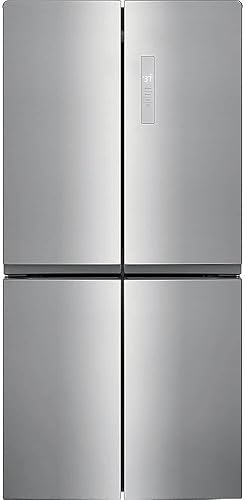


Why a regular fridge struggles in a garage
Every refrigerator and freezer has a thermostat that compares the room's temperature to the cabinet's temperature and decides when to run the compressor. That logic assumes the room stays roughly between a comfortable living temperature and a warm summer day. A garage breaks both ends of that assumption. The two failure modes are opposite but equally costly. In summer heat, the compressor has to fight a hot room and may run continuously, which shortens its life and drives up the energy bill. In winter cold, the problem is sneakier: when the garage drops below the cabinet's target, the thermostat sees a cold room and assumes its job is done, so the compressor never kicks on. The fridge section may be fine, but the freezer slowly warms and thaws. A garage-ready design exists specifically to close both gaps.
The temperature range a garage unit must survive
Most standard appliances list a recommended ambient operating range of about 55F to 110F. That is the window in which the manufacturer promises normal cooling. A garage routinely lives outside it. An attached garage in a cold climate can sit below freezing for weeks, while a closed garage in summer sun can climb well past 100F. A true garage-ready model widens that window on both ends, typically holding performance down toward 0F and up past 100F, though the exact figures vary by brand and model. The number that matters most is the low end. Anything that handles heat but not cold will still let your freezer thaw in winter, which is the most common and most expensive garage failure.
The spec lines that actually prove it
Marketing copy will say garage ready; the spec sheet tells the truth. Look for a stated ambient or operating temperature range with both a low and a high number, not just a vague claim. Search the manual or product page for a 'garage kit,' 'cold weather kit,' or 'garage ready heater' feature, which is the part that solves the winter shutoff problem. Note whether the unit is a refrigerator-only or freezer-only design, since combo fridge-freezers are the hardest to keep balanced in a cold garage. And read the warranty fine print: some manufacturers void coverage if the appliance runs outside its rated ambient range, which quietly tells you the unit is not built for garage extremes. If a listing offers none of these details, treat the garage-ready phrase as unverified.
The cold-weather kit, and why it matters most
The single component that makes a freezer survive a cold garage is a small heater near the thermostat, often sold as a garage kit or built into garage-ready models. It works by gently warming the air around the temperature sensor so the control still believes the room is warm enough to need cooling. That tricks the compressor into cycling on even when the garage is freezing, which keeps the freezer running and your food frozen. Some upright and chest freezers include this from the factory; others accept an add-on kit; many basic models accept neither. Before you assume a freezer will hold through winter, confirm in writing that it has a garage or cold-weather provision. Without it, a freezer in a sub-freezing garage can silently stop freezing while looking perfectly normal from the outside.
Chest freezer, upright freezer, or fridge: which handles a garage best
Form factor changes how forgiving a unit is in a garage. Chest freezers are the most resilient choice because cold air sinks and stays trapped when the lid is closed, so they hold temperature longer during heat spikes and open less often. Upright freezers are more convenient to organize and take less floor space, but their front-opening door spills cold air every time you open it, which is harder on the compressor in a hot garage. Full refrigerators are the trickiest, because the fridge and freezer compartments share one cooling system and a cold garage can starve the freezer while the fridge stays fine. If your garage swings to real extremes, a dedicated chest or upright freezer rated for the range is usually the safer bet than a combo refrigerator.
Setup tips that extend the life of any garage unit
Even a properly rated unit lasts longer with smart placement. Give it a few inches of clearance on the sides and back so the compressor's heat can escape, which matters even more in a hot garage. Keep it out of direct sunlight from a window or open door, since radiant heat raises the effective ambient temperature. Avoid plugging it into the same circuit as power tools or a second freezer, because a tripped breaker on a freezer you rarely check is how food quietly spoils. Keep a freezer reasonably full, as frozen mass holds temperature through a power blip or a door left ajar far better than empty air. And in winter, do not assume a unit without a cold-weather provision will run; check it on the coldest mornings until you trust it.
How to read a listing before you buy
Put it together as a quick checklist. First, find a stated ambient range with both a low and high number, and confirm the low end reaches near or below your garage's coldest realistic temperature. Second, look for an explicit garage-ready or cold-weather feature, ideally a heater or garage kit, not just the phrase. Third, prefer a dedicated freezer over a combo fridge-freezer if winter cold is your main concern. Fourth, check that the warranty does not exclude operation outside the rated range. If a product clears all four, the garage-ready label is doing real work. If it clears none, you are buying a standard appliance with hopeful marketing, and a single cold or hot season can prove it.
Frequently asked questions
What temperature range does a garage-ready unit need to handle?
It should perform well below the standard 55F floor and above the 110F ceiling that ordinary appliances assume. Exact figures vary by model, but the low end matters most, since a unit that handles heat but not cold will still let a freezer thaw in winter.
Will a regular freezer work in a cold garage?
Often no. When the garage drops below the freezer's target temperature, a standard thermostat sees a cold room and stops running the compressor, so the freezer slowly warms. Without a garage or cold-weather kit, a basic freezer can quietly stop freezing in a sub-freezing garage.
Is a chest freezer or upright freezer better for a garage?
A chest freezer is usually more forgiving because cold air sinks and stays trapped when the lid is closed, so it holds temperature through heat spikes. An upright is easier to organize but loses more cold air each time the front door opens, which is harder on the compressor in a hot garage.
What is a garage kit or cold-weather kit?
It is a small heater placed near the thermostat that gently warms the sensor so the control keeps the compressor cycling even when the garage is freezing. It is the part that prevents the winter shutoff problem, and some garage-ready models include it while basic units do not accept it at all.