What Size Refrigerator Do I Need? A Room-by-Room Sizing Walkthrough
Match cubic feet to your household, measure the alcove before you measure the fridge, and stop drinks from eating your shelf space.
If you are asking what size refrigerator you need, the short answer is a range, not a single number: plan for roughly 4 to 6 cubic feet of fresh-food space per person, then sanity-check that figure against the gap your kitchen actually leaves for a fridge. A two-person apartment is usually happy in the 14 to 18 cubic-foot band, a family of four lands around 22 to 25, and a busy household that cooks from scratch and buys in bulk often wants 25 cubic feet or more. The trap is buying on capacity alone and discovering the box does not fit the alcove, the doors will not clear the counter, or the whole thing is two-thirds full of soda. This walkthrough sizes the cabinet first, then the opening, then the swing, so the model you order actually slides into place and stays useful.


Start with household size, not the showroom
Capacity is the headline spec, and it is the easiest place to overspend or undershoot. The working rule most appliance fitters use is 4 to 6 cubic feet of fresh-food capacity per adult in the home, with a little extra for each person who cooks often or keeps a lot of leftovers. One or two people can live comfortably in a 10 to 14 cubic-foot fridge, which also covers most apartments and condos. Three or four people are best served by 18 to 22 cubic feet, and households of five or more, or anyone who hosts regularly, should look at 23 to 28 cubic feet. Habits matter as much as headcount: a vegetarian who shops twice a week needs less cold storage than a family that batch-cooks on Sundays. Be honest about how you actually eat before you commit to a number, because an oversized fridge wastes energy cooling empty air, while an undersized one pushes you into a second appliance sooner than you planned.
Measure the alcove before you fall in love with a model
The single most common return is a refrigerator that fits the budget but not the wall. Before you shortlist anything, measure the opening it has to live in: width between cabinets or walls, height from the floor to the underside of any upper cabinet or soffit, and depth from the back wall to the front edge of the surrounding counters. Then subtract clearance the manufacturer requires for airflow, usually about half an inch to an inch on each side, an inch at the top, and an inch or two at the back. A box that measures the same as the gap will not slide in cleanly, so always leave that margin. Write the three numbers down and treat them as hard ceilings. If your usable opening is 33 inches wide, a 36-inch French-door model is simply off the table no matter how good the price looks.
Counter-depth or standard-depth: the trade you actually feel
Depth is where capacity and kitchen flow collide. Standard-depth refrigerators are roughly 30 to 34 inches deep and stick out several inches past typical 24-inch base cabinets, which looks bulky but buys you noticeably more interior volume for the same width. Counter-depth models, around 24 to 30 inches deep, sit nearly flush with the counter for a built-in look but trade away a few cubic feet inside. If your kitchen is tight or the fridge sits at the end of a run where its bulk is obvious, counter-depth is worth the smaller interior. If the fridge tucks into a dedicated alcove where depth does not block a walkway, standard-depth gives you more food storage per dollar. Decide which matters more in your space before you compare capacities, because a 25 cubic-foot standard-depth and a 22 cubic-foot counter-depth can occupy the same footprint.
Door swing and clearance: the dimension people forget
A fridge that fits the alcove can still be a daily annoyance if the doors cannot open. Check three things. First, can the door swing wide enough to pull the crisper drawers fully out? Many bins need the door open past 90 degrees to clear, and a wall or island can block that. Second, does an open door hit an adjacent counter, cabinet handle, or the dishwasher when it is also open? Third, for side-by-side and French-door models, is there room for both doors plus you, standing in front with arms full of groceries? Sketch the swing arc on the floor with painter's tape before you buy. Top-freezer and single-door models forgive tight corners best, French-door layouts need a wider stance, and a true side-by-side with two narrow doors can be the sneaky winner in a galley kitchen where a single wide door would slam into the opposite counter.
Configuration changes how usable those cubic feet really are
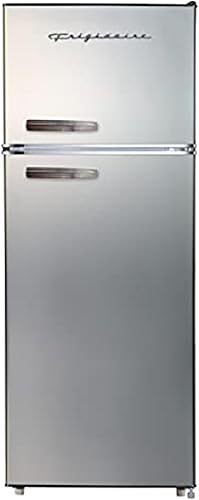
Two refrigerators can list the same capacity and feel completely different in daily use. Top-freezer models put the most usable fresh-food volume at eye level and cost the least, which is why they remain a smart pick for apartments and secondary kitchens. French-door layouts give you wide, shelf-friendly fresh-food space up top and a freezer drawer below, ideal for platters and weekly shops. Side-by-side units split the width vertically, which suits narrow kitchens and frequent freezer access but makes wide items like a sheet pan or pizza box awkward. When you compare models, do not just match the cubic-foot number; picture the items you store most and ask whether the layout actually holds them. Our refrigerators hub breaks the configurations down side by side so you can match a layout to how you cook, not just to a spec sheet.
Point overflow drinks at a beverage fridge
Here is the quiet reason so many people think they need a bigger refrigerator: drinks. Cans, bottles, sparkling water and a case of LaCroix can swallow an entire shelf and crowd out the food the fridge is actually meant to keep. Before you size up to a larger, pricier, energy-hungrier main unit just to hold beverages, consider offloading them. A dedicated beverage fridge holds drinks at their ideal serving temperature, frees a full shelf or two in the kitchen, and lets you keep the main refrigerator one size smaller. Compact models tuck under a counter or into a bar area, while a tall unit like a 20 cubic-foot beverage center can hold well over a hundred cans on its own. If your household entertains, drinks a lot of canned or bottled beverages, or you are torn between two refrigerator sizes, splitting the load is almost always cheaper and more flexible than buying up. Our beverage-fridges guide covers capacities and placement so the overflow has a proper home.
Put it together: a quick sizing checklist
Work the numbers in this order and you will rarely go wrong. One, estimate capacity from household size at 4 to 6 cubic feet per person, adjusting up if you cook a lot or shop in bulk. Two, measure the alcove width, height and depth, then subtract the manufacturer's airflow clearance to get your real maximum dimensions. Three, choose standard- or counter-depth based on whether interior volume or a flush look matters more in your kitchen. Four, tape out the door swing and confirm the drawers clear and nothing collides. Five, pick a configuration that matches what you store, not just a matching cubic-foot figure. Six, if drinks are the thing pushing you toward a bigger box, send them to a beverage fridge instead. Follow that sequence and the model you order will fit the wall, clear its doors, and hold what you actually keep cold.
Frequently asked questions
What size refrigerator do I need for a family of four?
Most families of four are comfortable in the 18 to 25 cubic-foot range, with 22 to 25 a safe target if you cook often or shop weekly. Drop toward the lower end if your kitchen opening is tight or you eat out frequently.
How many cubic feet does one person need?
A single person or a couple usually does well with 10 to 14 cubic feet of fresh-food capacity, which covers most apartment-friendly and compact refrigerators without paying to cool empty space.
Should I buy counter-depth or standard-depth?
Choose counter-depth for a flush, built-in look in open or tight kitchens, accepting a few cubic feet less inside. Choose standard-depth when the fridge sits in a dedicated alcove and you want maximum food storage for the width.
Do I really need a separate beverage fridge?
Not always, but if cans and bottles regularly take over a shelf, a beverage fridge frees that space, keeps drinks at serving temperature, and often lets you buy a smaller, cheaper main refrigerator instead of sizing up.