Why Is My Refrigerator Not Cooling? 9 Causes and What to Check First
A cold-blooded diagnostic checklist for the most common reason a fridge fails: the refrigerator not cooling but freezer works.
When your refrigerator is not cooling but the freezer works, the fridge is usually still making cold air; it just isn't reaching the fresh-food side. That single clue rules out the scariest, most expensive failures and points you toward a handful of cheap, fixable causes. Work down this list from easiest to hardest. Most owners solve the problem in the first three checks with nothing but a vacuum, a few hours of patience, and a thermometer. The last couple of causes are where you have to decide whether a repair is worth it or whether a new fridge is the smarter spend.


Start here: confirm the symptom and give it time
Before you tear anything apart, confirm what you are actually seeing. Put a glass of water with a thermometer on the middle fridge shelf and check it after a few hours. A healthy refrigerator section holds around 37 to 40 degrees Fahrenheit; a freezer should sit near 0. If the freezer is rock solid but the fridge drifts up into the 50s or 60s, you have the classic 'fridge warm, freezer cold' pattern, and the causes below apply in order. One important note: if you just adjusted a setting, moved the unit, or lost power, give the fridge a full 24 hours to stabilize before you assume something is broken. Refrigerators recover slowly, and a packed warm fridge can take most of a day to pull back down to temperature.
Cause 1 and 2: dirty condenser coils and a crowded fridge
The single most common reason a fridge struggles is dusty condenser coils. These coils, usually on the back or behind a kick panel underneath, shed heat from the system. When they cake over with dust and pet hair, the fridge can no longer dump heat efficiently, and cooling falls off, often on the fresh-food side first. Unplug the unit, find the coils, and vacuum them thoroughly, then brush out what the vacuum misses. Do this every six months and you prevent a surprising share of cooling complaints. While you are in there, look at how the inside is packed. Air has to circulate from the freezer through internal vents into the fridge. Boxes shoved against the rear vents, an overstuffed shelf, or items blocking the air channel can starve the fresh-food compartment of cold air even when the system is healthy.
Cause 3: blocked or frozen air vents between freezer and fridge
In most modern refrigerators, the fridge gets its cold air piped over from the freezer through a vent, usually near the top rear of the fresh-food compartment. If that vent ices over, the fridge stops getting cold air while the freezer stays perfectly cold, which is exactly the symptom you are chasing. Find the vent, and if you see frost or an ice dam, you have a defrost problem feeding into a cooling problem. A short-term test is to empty the fridge, unplug it, and let it sit with the doors open for 24 to 48 hours so the ice melts completely, then restart it. If cooling returns and then fails again days later, the defrost system itself is failing, which we cover below.
Cause 4: the evaporator fan motor
The evaporator fan lives in the freezer and pushes cold air across the coils and through the vent into the fridge. If that fan dies or runs intermittently, the freezer can still feel cold because it sits right next to the cooling coils, but the fridge never gets its share of moving air, so it warms up. A telltale sign: open the freezer and listen. A healthy evaporator fan hums; if it is silent or makes a clicking or grinding noise, suspect the fan. You can sometimes hear it stop when you open the door, since the door switch normally pauses it, so test with the door switch held in. A failed evaporator fan motor is a common, mid-cost repair and one of the more likely culprits when the freezer is cold but the fridge is not.
Cause 5: the defrost system (heater, thermostat, or control board)
Frost-free refrigerators run a defrost cycle several times a day to melt frost off the evaporator coils. When the defrost heater, defrost thermostat, or defrost timer or control board fails, frost builds into a solid block of ice over the coils. That ice blocks airflow, and the fridge warms while the freezer, closest to the remaining cold, holds longer. The classic pattern is intermittent: the fridge cools fine for a day or two after you manually melt the ice, then warms again as frost rebuilds. If your earlier vent thaw fixed cooling temporarily and then it failed, the defrost system is the prime suspect. These parts are individually inexpensive, but diagnosing which one failed takes some testing, and a control board replacement starts to add up.
Cause 6 and 7: door seals and the damper control
Two smaller causes are worth ruling out before you reach the expensive end of the list. First, the door gaskets: a torn, hardened, or dirty seal lets warm room air leak in, forcing the fridge to run constantly and still lose the battle on humid days. Test with a dollar bill: close it in the door and tug; if it slides out with no resistance, the seal is weak. Cleaning the gasket or replacing it is cheap. Second, the air damper, the little door that meters cold air from the freezer into the fridge. If it sticks shut, the freezer stays cold but the fridge is starved; if it sticks open, the fridge can over-cool. A stuck damper is a modest repair and a frequent overlooked cause of the freezer-works-but-fridge-doesn't symptom.
Cause 8 and 9: the compressor and sealed system
If you have worked down to here and both compartments are warming, or the compressor is silent, hot to the touch, clicking on and off, or buzzing without starting, you are looking at the start or relay, the compressor itself, or a refrigerant leak in the sealed system. Note the shift in symptom: a true compressor or refrigerant failure usually warms the whole unit, not just the fridge, so it is less likely the cause when the freezer is genuinely cold. A start relay is a cheap part. But a failed compressor or a sealed-system leak is the most expensive repair in the entire appliance, frequently approaching or exceeding the cost of a new refrigerator, especially on a unit that is already eight to twelve years old. This is the decision point.
Repair it or replace it: the simple math
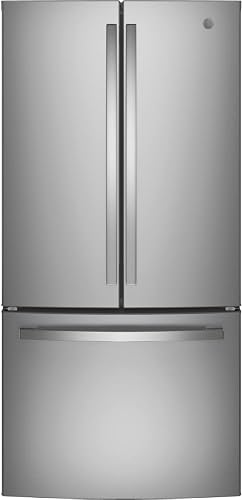
Use a plain rule of thumb. If the fix is coils, vents, a fan, a damper, a relay, or a defrost part, repair it; those are minor compared to a new appliance. If the diagnosis is a failed compressor or a sealed-system refrigerant leak, weigh the repair against the fridge's age. A common guideline: if your refrigerator is more than about eight years old and the repair quote runs past roughly half the price of a comparable new unit, replacement is usually the smarter spend. You stop pouring money into an aging system, gain a fresh warranty, and a modern model will typically run quieter and cost less to operate. If you reach that point, match the replacement to your space and capacity rather than overbuying. The compact and full-size models below cover the most common kitchen footprints, and our refrigerators hub walks through capacity, configuration, and price in more detail.
Frequently asked questions
Why is my refrigerator not cooling but the freezer works fine?
The most likely reasons are a blocked or frozen air vent between the two compartments, a failed evaporator fan that can't push cold air into the fridge, or a defrost system that has let ice build up over the coils. The freezer stays cold because it sits closest to the cooling coils, while the fridge is starved of moving air.
Can I fix a fridge that's warm but the freezer is cold myself?
Often yes. Vacuuming the condenser coils, clearing items away from the internal vents, and thawing a frosted-over vent by unplugging the unit for 24 to 48 hours are all DIY tasks. Fan, damper, and defrost-part replacements are doable for handy owners; compressor and refrigerant work needs a pro.
How long should I wait before deciding my fridge is broken?
Give it a full 24 hours after any setting change, move, or power loss before concluding something has failed. Refrigerators cool slowly, and a warm or freshly stocked unit can take most of a day to reach its target temperature.
When is it cheaper to replace the fridge than repair it?
When the diagnosis is a failed compressor or a sealed-system refrigerant leak on a refrigerator older than about eight years, and the repair quote approaches half the price of a comparable new unit. At that point a new fridge gives you a fresh warranty and lower running costs.