Beverage Fridge vs Mini Fridge: What's the Difference and Which One Is Right for You?
Not sure whether to get a beverage fridge or a mini fridge? Here's how they differ in cooling, capacity, and long-term satisfaction so you can make the right call.
If you're deciding between a beverage fridge vs mini fridge, the short answer is: a beverage fridge is designed specifically for drinks at ideal serving temperatures, while a mini fridge is more of a general-purpose compact refrigerator for food and drinks. But the choice goes deeper than that, and the right pick depends on what you plan to store and how you want to use it.
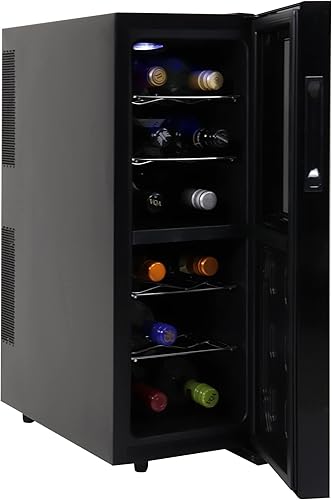
Beverage fridges typically have precise temperature controls and glass doors, making them perfect for showcasing sodas, beers, or wines at the perfect chill. Mini fridges, on the other hand, often include a small freezer compartment and adjustable shelving for snacks and leftovers. Over months of use, owners of beverage fridges tend to appreciate the consistent cooling and easy access, while mini fridge buyers often value versatility. Let's break down the key differences so you can choose with confidence.


Temperature Control and Cooling
Beverage fridges usually offer a wider and more precise temperature range, often from 34°F to 65°F, ideal for different drink types. Many use thermoelectric or compressor cooling, with compressor units providing consistent performance even in warm rooms. Mini fridges typically have a narrower range and may struggle to keep drinks uniformly cold across all shelves. For long-term satisfaction, beverage fridge owners consistently report better temperature stability, especially for carbonated drinks.
Capacity and Storage Design
Beverage fridges are built to maximize can and bottle storage, often with slide-out shelves or racks that fit standard 12-oz cans and wine bottles. The hOmeLabs HME030065N, for example, holds 3.2 cu ft and is a top seller with over 6,800 ratings. Mini fridges have more flexible shelving but waste space with a freezer compartment that may be too small for frozen food. If you're stocking up on drinks, a dedicated beverage fridge makes more sense.
Installation and Placement
Most beverage fridges are freestanding, but some like the NewAir ABR-1770 can be built in under counters. Mini fridges are almost always freestanding. Beverage fridges with glass doors look great in entertainment areas, while mini fridges are better hidden in dorms or offices. Consider where you'll put it: a beverage fridge often becomes a focal point, while a mini fridge is more utilitarian.
Energy Efficiency and Noise
Thermoelectric beverage fridges (e.g., Koolatron WC12-DZ) are quieter and more energy efficient, but less effective in hot rooms. Compressor models (like the Avanti WC34N2P) are louder but chill faster and maintain temperature better. Mini fridges almost always use compressors and can hum constantly. Over months of ownership, energy costs are minor for both, but noise can be a deciding factor if the fridge is in a living space.
Durability and Long-Term Satisfaction
Based on Amazon ratings, beverage fridges from brands like hOmeLabs (4.5 stars, 6,887 ratings) and Whynter (4.5 stars, 374 ratings) show high owner satisfaction. Mini fridges vary widely, with cheaper models often failing within a few years. Buyers of beverage fridges frequently praise the consistent performance and aesthetic appeal even after months of use. If you want something that lasts and looks good, a beverage fridge is the better bet.
Price and Value Comparison
Beverage fridges range from around $250 for a compact thermoelectric unit to over $1,500 for a built-in model. Mini fridges can be cheaper, starting under $100, but often lack the features that matter for drink storage. The best value beverage fridges sit in the $250-$400 range, like the hOmeLabs at $310. For the price, you get better temperature control, a glass door, and higher long-term satisfaction. Mini fridges are only a better value if you absolutely need freezer space.
Which One Should You Choose?
Choose a beverage fridge if you primarily store drinks and want them at the perfect temperature with easy visibility. It's ideal for home bars, offices, or entertainment rooms. Choose a mini fridge if you need a compact unit for mixed food and drink storage, or if you have a tight budget. For most buyers, a beverage fridge offers higher long-term satisfaction because it does one job very well. Check out our beverage fridge reviews for top picks.
Frequently asked questions
Can I use a beverage fridge as a mini fridge?
Yes, you can store food in a beverage fridge, but the temperature range is often set for drinks (above freezing). It lacks a freezer, so you can't keep ice cream or frozen items. For food, a mini fridge is more practical.
Are beverage fridges worth the extra cost?
If you drink a lot of soda, beer, or wine and want them at the perfect temperature, yes. The glass door and consistent cooling outperform a mini fridge for drinks. Long-term satisfaction ratings support this.
Do beverage fridges need ventilation?
Most freestanding beverage fridges need space around them for airflow. Built-in models like the NewAir ABR-1770 can be installed flush. Check the specs for clearance requirements.
Which is more energy efficient: beverage fridge or mini fridge?
Thermoelectric beverage fridges use less energy than compressor mini fridges. However, compressor beverage fridges are comparable to mini fridges. Energy consumption is modest for both.