Chest vs Upright Freezer: Which One Is Right for Your Home?
A head-to-head on usable space, running cost, organization and how long each style holds the cold when the power dies.
The chest vs upright freezer question comes down to four things: how much food you can actually fit, what it costs to run, how easily you can find what you froze, and how long it stays frozen during a blackout. As a rough rule, a chest freezer gives you more usable space and a longer outage hold time for the same price, while an upright freezer wins on organization and floor footprint. This guide walks through each trade-off so you can settle on a body type first, then shop specific models with a clear target in mind.


The short answer
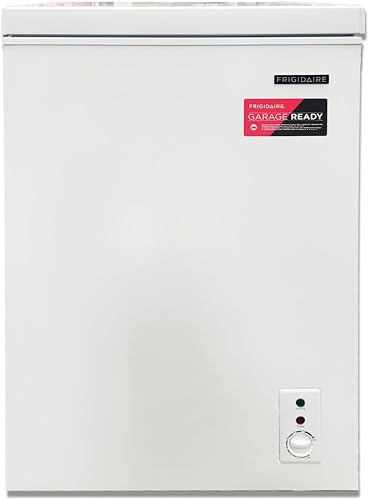
Pick a chest freezer if your priority is maximum capacity per dollar, the lowest running cost, and the best chance of saving your food through a long power outage. It is the right call for bulk shoppers, hunters, gardeners who put up a harvest, and anyone with a garage or basement to spare. Pick an upright freezer if you want to find things without digging, slot it into a kitchen or hallway, and you are willing to pay a little more up front and per month for that convenience. Neither is objectively better; they solve different problems. The rest of this guide explains why each one behaves the way it does.
Usable space: chest freezers fit more
On the spec sheet, a chest and an upright with the same listed cubic feet look identical. In practice the chest holds more usable food. A chest freezer is a single open box with no shelves, drawers, or door bins eating into the interior, so a 7 cu ft chest can swallow bulky, oddly shaped items that would never stack neatly on a shelf. An upright spends some of its rated volume on the door, the shelf frames, and the air gaps you need to keep around each level. The flip side is that the chest's space is one deep pit: things at the bottom get buried under whatever you load on top, and you will find yourself lifting out the top layer to reach a roast from three weeks ago. If raw fit-everything capacity is what you are after, the chest wins; just plan to use baskets or bins to keep older food reachable.
Running cost: the chest is cheaper to keep
Cold air sinks, and that simple fact drives the energy difference. When you open a chest freezer, you lift a lid and the cold pools downward, staying put inside the box. When you open an upright, the door swings out and a wave of cold air spills onto the floor while warmer room air rushes in to replace it, forcing the compressor to work harder to recover. Chest freezers are also typically better insulated through their thick, simple walls. The result is that a chest freezer usually costs noticeably less per year to run than an upright of the same capacity. Frost-free upright models close some of that gap on convenience but add cost, because the auto-defrost cycle periodically warms the cabinet and the compressor has to pull it back down. If electricity is expensive where you live and the freezer will run for years, those small monthly differences add up.
Organization: uprights win the daily grind
This is where the upright earns its keep. Shelves, door bins, and pull-out drawers let you sort food by type and see most of it at a glance, the same way you use a refrigerator. Grabbing a bag of peas takes seconds, and you can do a quick inventory without unloading anything. A chest freezer, by contrast, rewards a system and punishes the lazy. Without hanging baskets or labeled bins, the bottom of a chest becomes a frozen archaeology dig, and food gets forgotten and freezer-burned because nobody wants to excavate it. If your freezer earns its place by everyday use, several quick trips a week, the upright's at-a-glance layout will save you real frustration. If you load it seasonally and visit occasionally, the chest's dig-it-out nature matters far less.
Outage hold time: chest freezers keep cold longest
When the power goes out, the freezer becomes a giant cooler, and the same physics that lowers a chest's running cost also helps it ride out a blackout. A fully loaded freezer, kept closed, holds a safe temperature for roughly 48 hours, and about 24 hours if it is half full, regardless of style. But a chest holds cold longer in real terms for two reasons: the lid means cold air does not pour out the moment you peek inside, and the typically heavier insulation slows the warm-up. A packed chest in a cool garage can stretch well past two days. An upright, especially a frost-free model with its less dense insulation and front door, tends to give up the cold sooner once it is opened. If you live somewhere with frequent or long outages, that hold time is a genuine safety and money argument for the chest. The single most important move during any outage, for either style, is to keep the door or lid shut.
Footprint, defrost and noise
Beyond the big four, three practical points often decide it. Footprint: a chest freezer is wide and needs clear floor space plus headroom to open the lid, while an upright is tall and narrow and tucks into a corner, a pantry, or beside the fridge, which is why apartments and tight garages usually choose upright. Defrost: most chest freezers and budget uprights are manual-defrost, meaning you periodically empty them and let the ice melt, while frost-free uprights handle it automatically at the cost of more energy and a higher price. Noise: both run quietly, but compressor placement and where the unit lives matter more than the style; a freezer in a finished basement or kitchen is worth checking the noise rating on, whereas one in the garage rarely bothers anyone. Match the body type to where it will actually stand before you fall in love with a spec sheet.
How to decide quickly
Walk through it in order. First, where will it live? If the only spot is narrow or indoors, the upright is likely your answer regardless of the rest. Second, how will you use it? Frequent in-and-out use favors the upright's organization; seasonal bulk storage favors the chest. Third, how much does running cost and outage resilience matter? If power is pricey or outages are common, lean chest. Fourth, what is your budget? For the same capacity, a manual-defrost chest is usually the cheapest to buy and run, a frost-free upright the most convenient and the priciest. Once the body type is settled, you can shop a much shorter list of models with confidence, comparing real capacity, defrost type, and energy use rather than agonizing over the style itself.
Frequently asked questions
Which freezer is more energy efficient, chest or upright?
A chest freezer is usually more efficient for the same capacity. Cold air sinks and stays inside when you lift the lid, and chests tend to be better insulated, so the compressor works less than in a front-door upright.
How long will food stay frozen during a power outage?
A full freezer kept closed holds a safe temperature for about 48 hours, and roughly 24 hours if half full. A packed chest in a cool spot often beats that, since its lid and insulation hold cold longer than an upright's.
Is a chest or upright freezer better for a garage?
Either can work, but check that the model is rated for garage temperatures. Chests suit wide spaces and bulk storage and ride out outages well; uprights fit narrow corners and are easier to organize for frequent use.
Do upright freezers really hold less than chest freezers?
For the same rated cubic feet, a chest holds more usable food because it has no shelves, drawers, or door bins taking up space. The trade-off is that the chest's deep, single compartment is harder to dig through.