Countertop Ice Maker Buying Guide: How to Pick One That Keeps Up
A plain-English walk through the four specs that decide whether a countertop ice maker keeps your glass full or leaves you waiting.
A countertop ice maker is the cheapest way to stop running out of ice without plumbing in a line or buying a bigger fridge. Plug it into an outlet, pour in water, and it drops the first batch of cubes in well under ten minutes. The catch is that the small ones look almost identical on a shelf, yet they behave very differently once they are working hard at a party or through a hot week.
This guide covers the handful of things that actually change your day to day: the kind of ice it makes, how much it can produce and hold, how you refill it, and how loud and how easy to clean it is. Get those right and a sub-$150 machine will quietly keep up. Get them wrong and you end up babysitting a unit that melts its own ice faster than it can replace it. At the end we point you to FridgeFanatic's ranked ice maker picks so you can match this advice to a real model.


Know the difference between portable and built-in
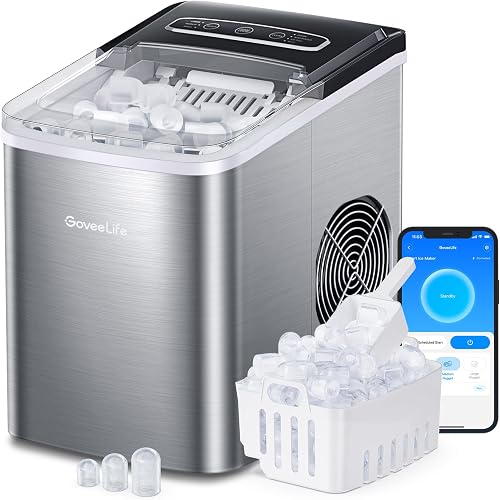
Almost every machine sold as a countertop ice maker is a portable, freestanding unit. It is self-contained: you pour water into an internal reservoir, the compressor freezes ice around metal prongs, and finished cubes drop into a small basket. There is no drain and no water line, so you can move it to a counter, a bar cart, or a campsite and run it from any outlet.
The trade-off is that the basket is not a freezer. It is simply an insulated holding bin, so ice slowly melts and the meltwater recycles back into the reservoir to be refrozen. That is fine for same-day use, but a portable unit is not a way to stockpile ice overnight. If you genuinely need a standing reserve, you want an under-counter or built-in machine that drains to plumbing and stores ice in a true freezer compartment, which is a different and far more expensive category.
Pick your ice shape first
Ice shape is the decision people regret most often, because it is fixed by the machine and changes how the ice feels to use. Most affordable countertop makers produce bullet ice: hollow, slightly cloudy cylinders made fast by freezing water around a prong. Bullet ice chills a drink quickly, is great for coolers and soft drinks, and is what the cheapest, highest-output machines make.
If you care about how a cocktail or water glass looks and tastes, look at nugget or clear-cube models instead. Nugget (the chewable 'pellet' ice from drive-through fountains) is soft, absorbs flavor, and is a favorite for crunching, but those machines cost more and produce less per hour. Clear-cube makers freeze water in layers to push out air, yielding slower-melting, restaurant-style cubes, but they are slower and pricier still. Decide which of the three you actually want before you compare anything else, because no setting converts one into another.
Match daily output and basket size to how you use ice
Spec sheets quote two very different numbers, and confusing them leads to disappointment. The first is daily output, often 26 to 44 pounds per 24 hours, which assumes the machine runs nonstop and you empty the basket as it fills. The second, much smaller number is basket capacity, typically only one to three pounds. A machine that 'makes 33 pounds a day' may only hold about two pounds at a time before it pauses.
Think in terms of cycles. A typical portable unit drops nine cubes every six to twelve minutes, so a single round of drinks is fast, but it cannot hand you ten pounds on demand. For everyday drinks and the odd guest, almost any unit copes. For a party, plan to scoop ice into a cooler as it is made rather than expecting the basket to bank it, and consider a higher-output model so the machine refills faster than the crowd drains it.
How you refill it matters more than you think
Because portable makers recycle their own meltwater, the reservoir is small and you will top it up often during heavy use. Two details make this painless or annoying. First, look for a clearly visible water-level window or a low-water indicator, so you are not lifting the lid every few minutes to check. Second, check whether the reservoir is easy to reach and pour into without spilling onto the counter.
A few machines accept a permanent water line for hands-off refilling, but most are pour-fill only, and that is fine for kitchen-counter use. If the unit will live somewhere awkward to reach, or you want it to run unattended, that is worth confirming on the spec sheet before you buy. Most buyers are best served by a simple pour-fill model with a big, obvious water window.
Noise, footprint, and where it will live
These machines run a compressor and a fan, so none of them are silent. A good one is a steady hum you tune out; a poor one rattles and clunks each time a batch of ice drops. If the maker will sit in an open kitchen or near a living space, read owner feedback specifically about noise, since the headline specs rarely mention it.
Footprint is easy to overlook. A countertop unit is small but tall, and it needs a few inches of clearance around the vents to shed heat, plus room to lift the lid. Measure the spot, including the cabinet above it, before ordering. Also leave it upright for a couple of hours after delivery before first use, so the compressor oil settles, the same courtesy you would give a small fridge.
Cleaning and reliability
An ice maker handles standing water all day, so cleaning is not optional. Scale and slime build up in the reservoir and on the prongs within weeks, which is what makes ice taste off or come out cloudy and soft. Plan to run a water-and-vinegar (or a maker-safe descaler) cycle every couple of weeks and to wipe out the basket. Models with a one-button self-clean cycle make this far easier to keep up with, and that single feature does more for long-term reliability than most.
The parts that fail are predictable: the small water pump, the float sensor that detects ice level, and the compressor. A clear digital display, a responsive ice-full sensor, and a brand with reachable support are worth more than an extra pound of rated output. Before you commit, check the exact model against verified owner reviews. The most common complaints, slow ice in a warm room and a sensor that thinks the basket is full when it is not, show up quickly in real feedback.
Four picks that fit the advice
FridgeFanatic ranks ice makers by spec, price, and verified buyer demand rather than marketing copy, and a few models map cleanly onto the choices above. For a reliable all-rounder, the Frigidaire EFIC128 is one of the most-reviewed countertop bullet-ice makers we track, with a strong rating across many thousands of buyers. If you want the same idea in a smaller, lower-cost footprint, the Frigidaire EFIC123 is a compact bullet-ice unit with a long, solid review history. The GoveeLife H7172 stands out for convenience, pairing a self-clean cycle and app control with high real-world demand, which is exactly what keeps maintenance from sliding. And the VIVOHOME VH1180 is a budget-friendly, high-volume option for buyers who mainly want plenty of fast bullet ice without spending more. See the full ranked list, with output and ice type side by side, on our best ice makers page.
Frequently asked questions
How long does a countertop ice maker take to make ice?
Most portable units drop their first batch of nine bullet cubes in about six to ten minutes, then repeat the cycle continuously. Clear-cube and nugget machines are slower because they freeze ice more carefully.
Do countertop ice makers keep ice frozen?
No. The basket is insulated but not refrigerated, so ice slowly melts and the water is recycled to be refrozen. Use the ice the same day, or move it to a freezer or cooler if you need it to last.
Do they need a water line or a drain?
Most do not. You pour water into an internal reservoir and there is no drain, which is what makes them portable. A few models accept an optional water line, but that is the exception, not the rule.
Why does my ice maker's ice taste bad?
Almost always scale or slime in the reservoir. Run a vinegar or descaler cleaning cycle every couple of weeks and use fresh, filtered water; a model with a self-clean cycle makes this much easier to keep up.