Do Countertop Ice Makers Need a Water Line?
The plain answer to whether countertop ice makers need a water line, plus how each type fills, and how to choose between a pour-in unit and a plumbed one.
Here is the short answer: no, countertop ice makers almost never need a water line. The whole point of a countertop, or portable, ice maker is that you pour water into an internal reservoir, plug it into a standard outlet, and it starts making ice in minutes. There is no installation, no plumber, and no shutoff valve to find behind the fridge.
The confusion usually comes from mixing up two very different machines. A countertop unit is self-contained and refills by hand. A built-in or undercounter ice maker, on the other hand, is plumbed directly to your home's water supply and often needs a drain too. Below we walk through how each type fills, when plumbing actually is required, and how to figure out which one fits your kitchen and how you use ice.


How a countertop ice maker actually gets its water
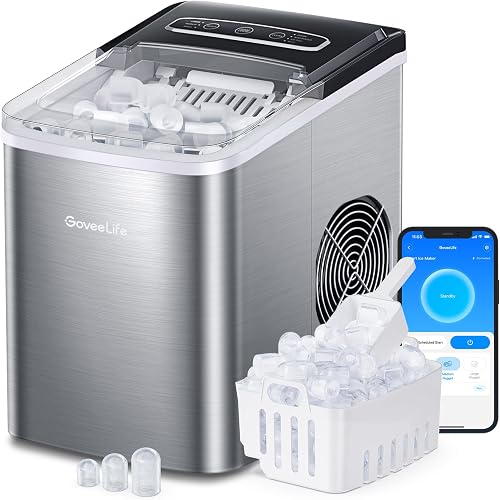
A countertop ice maker holds its water in a built-in reservoir, usually a tank at the base that you fill by lifting a lid or pouring through an opening, often somewhere between half a gallon and a gallon at a time. A small pump moves that water over a set of chilled prongs or into a tray, and the unit freezes, harvests, and drops finished ice into a removable basket in a continuous loop until either the basket is full or the reservoir runs dry. When the water is low, most units flash an indicator and pause, and you simply top them up. Because the basket is not refrigerated, the ice it makes is meant to be used or transferred to a freezer fairly soon rather than stored for days. The practical upshot is that the machine needs nothing but a flat surface, a wall outlet, and you remembering to refill it. There is no permanent connection to your home at all.
Which ice makers do need a water line
The machines that require plumbing are the ones built to disappear into your kitchen. A built-in or undercounter ice maker is designed to sit under a counter or slot into cabinetry and run hands-free, so it taps directly into a cold water line and, in most cases, routes melt and overflow into a drain. Whole-fridge ice and water dispensers work the same way, fed by a line behind the refrigerator. These units make ice automatically around the clock without anyone topping up a tank, which is exactly why they exist, but the trade-off is real installation: a water line run to the unit, a shutoff valve, and often a drain or a small pump to move waste water. If a product listing mentions a water inlet, a drain pump, a quarter-inch supply line, or undercounter installation, you are looking at a plumbed machine, not a pour-in countertop one.
Pour-in versus plumbed: which is right for you
The decision comes down to how much ice you go through and how much hassle you will tolerate. A pour-in countertop unit wins on flexibility: it costs less up front, installs in zero minutes, moves with you to a new apartment, and can sit on a counter, a bar cart, or a deck for a party. The catch is that you are the water line, so you refill it by hand and it is not truly set-and-forget. A plumbed built-in unit wins on volume and convenience: it makes and stores far more ice with no babysitting, which suits big families, frequent entertainers, or a home bar that needs ice on demand. The catch is cost, a permanent spot, and either some plumbing know-how or a paid install. If you mostly want ice for daily drinks and the occasional gathering, a countertop unit is almost always the smarter buy.
What to look for in a no-plumbing countertop unit
Once you have settled on a pour-in model, a few specs separate the good from the frustrating. Look at daily output, usually quoted in pounds of ice per 24 hours, and match it to your real use rather than the headline number, since output drops in a warm room. Check the first-batch time, because the better units produce their first ice in well under ten minutes. Reservoir size matters too: a bigger tank means fewer refills, while a small one is fine for a single person. Consider the ice shape, since chewable nugget or bullet ice suits drinks better than thin flakes for some people. Finally, weigh footprint and noise, especially if it lives on a kitchen counter you use constantly. A reusable water filter, a self-clean cycle, and a clear low-water indicator are the quality-of-life features worth paying a little extra for.
Filling, cleaning, and water quality
Because you control the water going in, you also control the quality of the ice coming out. Most makers run fine on filtered tap water, and using filtered or low-mineral water noticeably reduces the scale buildup that shortens a machine's life and makes ice taste off. Avoid distilled water in some models, since a few units rely on minerals to sense the water level, so check the manual first. Plan to empty the reservoir when you are done for the day rather than leaving standing water, and run a cleaning cycle with a manufacturer-approved solution or a diluted vinegar rinse every couple of weeks if you use it daily. Hard-water households will see scale faster and should clean more often. None of this requires tools, just a few minutes, and it is the single biggest factor in how long a pour-in unit keeps performing like new.
Common myths about countertop ice makers
A few persistent myths trip up first-time buyers. The first is that countertop ice makers keep ice frozen like a freezer; they do not, because the storage basket is insulated but not chilled, so unused ice slowly melts and the meltwater is recycled back into the next batch. The second is that they need a drain. Standard countertop units have no drain at all; the water simply cycles inside until you empty it. The third is that they must connect to a water line to work properly, which, as covered above, applies only to built-in and undercounter machines. The last is that all portable ice makers are loud or slow. Modern units are reasonably quiet and fast, and the gap between a budget model and a good one is real, which is exactly why it pays to compare before you buy.
Shortlisting the right countertop ice maker
If a no-installation, pour-in unit is what you want, the smart move is to compare a handful of proven models on output, refill size, ice shape, noise, and price rather than grabbing the first one you see. Pay close attention to how many people have actually bought and rated a unit, because in this category a high review count across thousands of owners tells you far more about real-world reliability than a lone five-star listing. We track countertop and portable ice makers by capacity, ice type, price, and verified buyer demand, and keep a current shortlist of the units worth comparing first. Use the recommendations below to jump straight to dependable pour-in models, then come back to the output and water-quality notes above before you commit.
Frequently asked questions
Do countertop ice makers need a water line?
No. Countertop, or portable, ice makers fill from an internal reservoir that you pour water into by hand, so they need only a flat surface and a standard outlet. Only built-in and undercounter ice makers connect to a home water line, and those usually require a drain as well.
Do portable ice makers need a drain?
Standard countertop units do not. The water cycles inside the machine and any meltwater is recycled into the next batch, so you simply empty the reservoir when you are finished. A drain is only needed on plumbed built-in or undercounter ice makers.
Can a countertop ice maker store ice for later?
Not for long. The storage basket is insulated but not refrigerated, so unused ice slowly melts and the water is recycled. For ice you want to keep, transfer it to your freezer; otherwise just make a fresh batch when you need it, which takes only minutes.
What kind of water should I use in a countertop ice maker?
Filtered or low-mineral tap water is ideal because it reduces scale buildup and keeps the ice tasting clean. Check your manual before using distilled water, since a few models rely on minerals to detect the water level. Empty the reservoir and clean the unit regularly for the best performance.