How Does a Countertop Ice Maker Work?
Countertop ice makers produce ice in minutes using a simple cycle of water pumping, freezing, and harvesting. Here is how they work and which models satisfy buyers long term.
A countertop ice maker works by pumping water into a chilled evaporator, freezing it into cubes, then harvesting them into a basket. The cycle repeats automatically until the basket is full or the water reservoir is low. Unlike traditional ice trays, these machines produce the first batch in as little as 6-10 minutes.
The process involves a water reservoir, a pump, an evaporator, and a thermostat. When you plug in the unit and add water, the pump circulates water over the cold evaporator fins. Ice begins to form, and once thick enough, a sensor triggers a heating cycle to release the cubes into the bin. No drainage is required for most models; you simply empty the basket and refill the reservoir. This simplicity is why long term satisfaction is high among owners who prioritize convenience and speed.


The Basic Ice Making Cycle
Countertop ice makers follow a straightforward four step cycle. First, water from the reservoir is pumped to the top of the evaporator. Second, the evaporator, which is cooled by a compressor, causes ice to form on its vertical pins. Third, once the ice reaches the right thickness, the machine stops cooling and briefly heats the evaporator to loosen the cubes. Fourth, a rotating mechanism pushes the ice into the basket below. The cycle then repeats. The entire process takes about 7-15 minutes for a batch, depending on room temperature and water temperature. Most machines produce 9 to 12 cubes per batch.
Key Components Inside the Machine
Every countertop ice maker has a few essential parts. The water reservoir holds the water you pour in; it typically has a capacity of 1 to 2 liters. A small pump sends water up to the evaporator. The evaporator is a set of metal rods or a flat plate that gets cold via the compressor and refrigerant. A thermostat or sensor detects when ice is thick enough. A solenoid or heater then warms the evaporator slightly so the ice releases. Finally, a rotating arm or conveyor pushes the ice into the storage basket. Some models also have a recirculation pump to keep water flowing over the evaporator evenly.
What to Expect for Ice Quality and Shape
Most countertop ice makers produce bullet shaped ice that is clear or slightly white. The shape comes from the vertical freezing rods. Bullet ice is solid and cools drinks quickly. Some models offer two sizes: small and large. The size selection affects freezing time and yield. Ice clarity depends on water purity and the speed of freezing because dissolved air trapped in the water creates bubbles. If you want clearer ice, use filtered water. Buyers report that these machines produce ice that is consistent and satisfying for everyday use. The ice is not as dense as nugget or gourmet ice but works well for cocktails, iced coffee, and parties.
Long Term Satisfaction: What Buyers Love Months Later
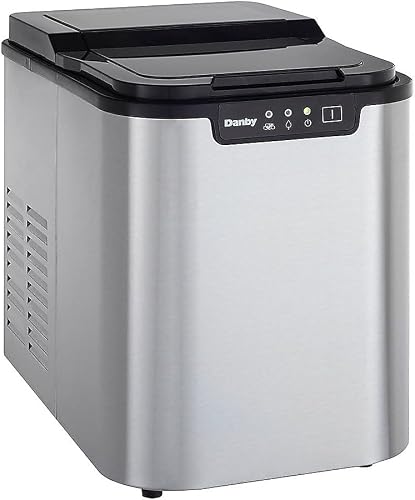
After several months, owners appreciate the convenience of having ice on demand without refilling trays. The speed is a standout: a fresh batch every 10 minutes keeps up with gatherings. Many users also like the compact footprint. Models like the NewAir AI-100BK (4.0 stars, 1,200 reviews) and Danby DIM2500SSDB (4.1 stars, 646 reviews) are praised for reliability. However, some note that the ice melts faster than traditional freezer ice because it is colder and drier. Regular cleaning to prevent scale buildup is a minor chore. Overall, long term satisfaction remains high for those who use their machine regularly.
Choosing a Model That Fits Your Needs
When selecting a countertop ice maker, consider batch time, cube size options, and capacity. The NewAir AI-100R (4.1 stars, 892 reviews) and NewAir AI-100BK (4.0 stars, 1,200 reviews) are popular choices at $150. For a budget pick, the RCA RIC102-SILVER ($59.95, 3.8 stars, 954 reviews) works well. If you need a larger bin, the Whynter FIM-450HS ($399, 4.1 stars, 49 reviews) offers a 60-pound weight and higher capacity. Check if the unit has a self cleaning function and a viewing window. Most buyers recommend reading recent reviews for real world feedback on noise levels and durability. Always choose a model with a warranty.
Maintenance Tips for Long Life
To keep your ice maker running well, clean it every 1-2 months. Use a vinegar and water solution to descale the reservoir and pump. Wipe down the evaporator pins with a soft cloth. Make sure the air vents are not blocked for proper airflow. Replace the water frequently to avoid stale taste. Some models have a self clean cycle that simplifies this. Avoid using distilled water as it may not freeze as efficiently. Following these steps will extend the life of your machine and keep ice quality high. Owners who perform regular maintenance report fewer problems and longer lasting performance.
Common Misconceptions About Countertop Ice Makers
A common myth is that countertop ice makers need a drain. Most are freestanding and require no plumbing. You just pour in water and empty the bin. Another misconception is that they make ice as hard as freezer ice. The ice is softer and melts faster, which some people prefer. Some worry about noise. Compressor models make a hum, but it is usually not disruptive in a kitchen. Finally, many think they produce unlimited ice. In reality, they have a storage limit; once the basket is full, the unit stops. But with continuous cycling, you can keep up with a party. Understanding these facts helps set expectations.
Frequently asked questions
How long does it take a countertop ice maker to make ice?
Most countertop ice makers produce the first batch in 6 to 15 minutes. Subsequent batches are faster because the machine stays cold. Room temperature and water temperature affect time.
Do countertop ice makers need a drain?
No, most portable ice makers are self contained and do not require a drain. They recirculate the water and you manually empty the ice basket. Some models have a drain plug for easy cleaning.
Can I leave my countertop ice maker on all the time?
Yes, you can leave it on continuously. It will automatically stop making ice when the basket is full. However, the ice will melt slowly if not used. To preserve ice, some models have a cooling fan. Turn it off when not needed to save energy.
Why is my countertop ice maker making small or cloudy ice?
Small ice often indicates low water level or a clogged filter. Cloudy ice is due to air bubbles from rapid freezing or impurities in the water. Use filtered water and clean the machine regularly for clearer ice.