How Long Does Soup Last in the Fridge?
Soup is a meal prep favorite, but it doesn't stay safe forever. Learn the recommended fridge storage times, how to tell when it's past its prime, and which refrigerators help maintain consistent temperature for longer freshness.
Soup lasts 3 to 4 days in the refrigerator when stored properly in an airtight container at 40°F or below. This is the consensus from food safety authorities, and it holds true for most homemade and store-bought soups. The key is rapid cooling and consistent fridge temperature.
If you've ever wondered how long does soup last in the fridge, the answer depends on a few factors: the type of soup, how quickly it was chilled, and your refrigerator's temperature stability. Soups with dairy or seafood spoil faster, while broth-based vegetable soups may stretch to the 4-day mark. For longer storage, freeze soup in portion-sized containers where it will keep for 2 to 3 months. The best way to maximize soup's fridge life is to keep your refrigerator at a steady 37 to 40°F and store soup in shallow containers to speed cooling.


How Long Does Soup Last in the Fridge? The Short Answer
Soup lasts 3 to 4 days in the refrigerator. That's the official recommendation from the USDA and most food safety experts. After that, the risk of spoilage bacteria increases, even if the soup looks and smells fine. The clock starts ticking the moment you finish cooking or open a store-bought container. To get the full 4 days, cool soup quickly (within 2 hours) and store it in a sealed container. If your fridge runs warm or you open the door often, stick to 3 days. For maximum safety, label your containers with the date so you know exactly when to toss or freeze.
Factors That Affect How Long Soup Stays Fresh
Not all soups are equal when it comes to fridge life. Creamy soups, chowders, and those with meat or seafood tend to spoil faster than clear broths or vegetable soups. Acidic ingredients like tomatoes can actually help preserve soup a bit longer. The container matters too: wide, shallow dishes cool soup faster than deep pots, reducing time in the danger zone (40 to 140°F). Your refrigerator's temperature consistency is equally critical. A fridge that fluctuates above 40°F shortens soup's shelf life significantly. That's why models with precise temperature controls and good air circulation, like some of the recommended refrigerators below, can make a real difference.
Signs Your Soup Has Gone Bad
Even within the 3 to 4 day window, soup can spoil if it wasn't handled correctly. Trust your senses. A sour or off smell is the first red flag. Visual cues include mold, cloudiness in clear broth, or a slimy film on the surface. If the texture has changed (curdled dairy, mushy vegetables that should be firm), it's time to toss it. Taste is the last test: if everything seems fine but the soup tastes off or slightly fizzy, bacteria may be present. When in doubt, throw it out. Food poisoning from spoiled soup is no joke. Remember, if your refrigerator's temperature was ever above 40°F for more than two hours, any soup inside should be discarded regardless of how it looks or smells.
Best Practices for Storing Soup in the Refrigerator
To maximize soup's fridge life, follow these steps. First, cool soup quickly: place the pot in an ice bath or divide into shallow containers. Never put a large, hot pot directly in the fridge; it can raise the internal temperature and endanger other foods. Once cooled to room temperature (within 2 hours), transfer soup to airtight containers. Glass or BPA-free plastic with tight seals work best. Leave a little headspace for expansion if freezing. Label with the date and type of soup. Store on a middle shelf, not the door, where temperatures are most stable. Keep your fridge at 37 to 40°F and use a thermometer to verify. If you notice ice crystals forming on soup stored in the fridge's main compartment, your temperature may be too low or the container isn't sealed properly.
Can You Extend Soup's Fridge Life Beyond 4 Days?
The official 3 to 4 day guideline is for safety, not quality. Some soups, especially those with high acid or salt content, might taste fine on day 5. But the risk of pathogen growth increases with time. Freezing is the best way to extend shelf life without sacrificing safety. Soup freezes well for 2 to 3 months in airtight containers or freezer bags. For best quality, thaw in the refrigerator overnight and reheat to 165°F. Avoid refreezing thawed soup. If you find yourself with leftover soup you won't eat in 4 days, freeze it by day 2 or 3. This locks in freshness and gives you a quick meal later.
Choosing the Right Refrigerator for Soup Storage
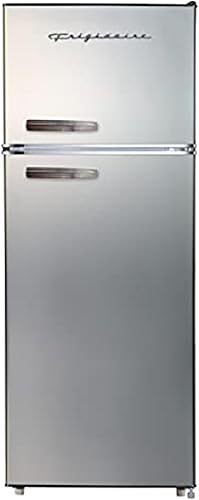
A refrigerator that maintains a steady temperature just above freezing is key to keeping soup safe and tasty for the full 3 to 4 days. Models with good air circulation and reliable thermostats prevent warm spots. For smaller households, a compact refrigerator like the Frigidaire EFR753-PLATINUM (7.5 cu ft, 4.1 stars from 586 reviews) offers ample space and consistent cooling. For those needing more capacity, the Samsung RF18A5101SR/AA (18 cu ft, 3.9 stars) provides even temperature distribution. If you're looking for a budget option, the Galanz GLR44BEER (4.4 cu ft, 3.9 stars) is a simple, reliable choice. When shopping for the best refrigerators for food storage, prioritize models with adjustable shelves and good seals to minimize temperature fluctuations.
Frequently asked questions
Can I eat soup after 5 days in the fridge?
It's not recommended. The USDA says soup is safe for only 3 to 4 days. Even if it looks and smells fine, harmful bacteria may have grown. For safety, toss any soup older than 4 days.
Does soup last longer in the fridge if it's store-bought?
Store-bought soup may have preservatives, but once opened, the same 3 to 4 day rule applies. Unopened shelf-stable soup lasts much longer in the pantry, but refrigerate after opening.
How do I quickly cool soup for the fridge?
Divide soup into shallow containers (2 inches deep) and place in an ice bath, stirring occasionally. Or use a cooling wand. Cool to room temperature within 2 hours before refrigerating.
What's the best way to reheat refrigerated soup?
Reheat soup on the stove or microwave until it reaches a rolling boil or 165°F. Stir to ensure even heating. Only reheat the portion you plan to eat to avoid repeated temperature changes.