How Long Will Food Last in a Fridge or Freezer During a Power Outage?
The simple time rules that decide whether your food is safe, and how to stretch them when the lights go out.
When the power goes out, the clock starts. As a rule of thumb, food in a refrigerator stays safe for about 4 hours if you keep the door shut, while a full freezer holds a safe temperature for roughly 48 hours (24 hours if it is only half full). The single biggest thing you control is how long does food last in fridge without power, and the answer comes down to one habit: stop opening the door. Every time you peek inside, warm air rushes in and cold air spills out, and you trade away precious minutes of safety. This guide walks through the exact time limits, the temperature threshold that actually matters, why a packed chest freezer outlasts everything else, and a clear keep-or-toss checklist for when the power comes back.


The 4-Hour Fridge Rule
A refrigerator has very little thermal mass compared to a freezer, so it warms up fast once the compressor stops running. The widely used food-safety guideline is that refrigerated food stays safe for about 4 hours after the power goes out, provided you keep the door closed the entire time. That window assumes the fridge was at a normal temperature to begin with and that the door stays shut so the cold air trapped inside has nowhere to escape. After roughly 4 hours, perishable items in the fridge climb into the danger zone above 40 degrees Fahrenheit, where bacteria multiply quickly. If you are past that 4-hour mark and the food has warmed above 40 degrees, the safe move is to discard it. When in doubt, throw it out: a spoiled meal is far cheaper than food poisoning.
The 24 to 48-Hour Freezer Rule
A freezer buys you far more time because frozen food itself acts as a giant block of stored cold. A full freezer will typically keep food frozen, or at least below the 40-degree safety line, for about 48 hours. A freezer that is only half full holds that temperature for roughly 24 hours, because there is more air and less frozen mass to slow the warm-up. The lesson is simple: a fuller freezer is a safer freezer. If a storm is in the forecast and your upright freezer is half empty, fill the gaps with jugs of water, bags of ice, or anything that will freeze solid. Those frozen blocks add thermal mass and help carry your food through a longer outage.
Why a Packed Chest Freezer Holds Cold Longest
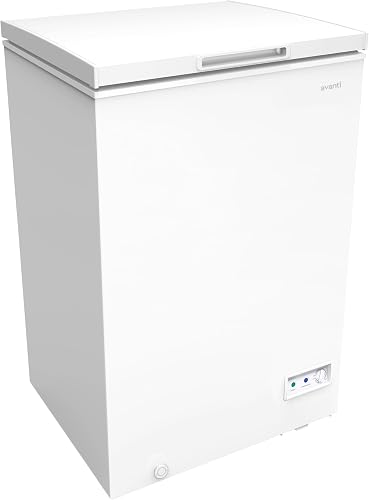
Not all freezers ride out a blackout equally. A chest freezer almost always outlasts an upright, and a packed one outlasts a sparse one. Two things work in its favor. First, cold air is dense and sinks, so when you lift the lid of a chest freezer the cold pools at the bottom and stays put rather than tumbling out the way it does from a vertical door. Second, a tightly packed load is mostly frozen food rather than air, and that solid mass takes much longer to thaw than the empty space inside a half-full cabinet. Chest freezers also tend to have thicker, better-sealed insulation. Put those factors together and a well-stocked chest freezer can comfortably hold safe temperatures for the full 48-hour window, and sometimes longer, while a lightly loaded upright gives up first. If you live somewhere with frequent outages, a chest freezer is the most outage-resistant cold storage you can own.
Keep the Doors Shut
This is the rule that quietly decides everything. The 4-hour and 48-hour figures all assume the doors stay closed. Each time you open the fridge or freezer, you vent cold air and let warm room air flood in, and the appliance cannot make it back since the power is out. Resist the urge to check whether things are still cold, because the act of checking is exactly what shortens your window. Before an outage, decide what you need and grab it in one trip, or better yet, keep a small cooler with ice for the items you reach for often so the main units stay sealed. If you must open a freezer, do it fast, take what you need, and shut it immediately. Treat those doors as if they are welded shut and your food will last as long as the rules promise.
Check Temperature, Not Just the Clock
Time limits are a guide, but the real test is temperature. The danger zone for perishable food is above 40 degrees Fahrenheit for the fridge, and food should still be considered safe to refreeze if it is at or below 40 degrees or still has ice crystals. The most reliable approach is to keep an appliance thermometer in both the fridge and the freezer so you can read the actual temperature the moment power returns, rather than guessing. A clever trick for the freezer is the frozen-water test: freeze a cup of water solid, then place a coin on top of the ice and leave it in the freezer. If the coin has sunk to the bottom of the cup when you return, the freezer thawed and refroze while you were away, which tells you the food got too warm at some point even if it looks frozen now.
What to Toss vs. Keep Afterward
Once the power is back, sort your food rather than dumping everything or saving everything. From the fridge, discard perishable items that sat above 40 degrees for more than 2 hours: this includes raw and cooked meat, poultry, seafood, dairy, eggs, soft cheeses, cooked leftovers, cut fruit, and any cooked rice or pasta. Hard cheeses, butter, most condiments, whole fresh fruit, and unopened juices generally survive and can stay. For the freezer, the good news is that any food still containing ice crystals or sitting at 40 degrees or below can be safely refrozen, though the texture of some items may suffer. Throw out anything that fully thawed and warmed past 40 degrees, especially meat, poultry, and seafood. The guiding principle never changes: if you are unsure how warm something got or how long it was warm, throw it out. Smelling or tasting questionable food does not tell you whether it is dangerous.
How to Prepare Before the Next Outage
A little prep turns a stressful outage into a non-event. Keep your freezer reasonably full so it holds cold longer, using water jugs to fill empty space. Stash a few appliance thermometers and the frozen-water coin test so you can judge safety on facts, not hope. Have a cooler and ice packs ready for the handful of fridge items you actually use during an outage, which lets you keep the main fridge sealed. If outages are a regular part of life where you live, consider where your cold storage sits in the bigger plan: a dedicated chest freezer is the workhorse that holds out longest, an upright freezer trades some endurance for easier organization, and your main refrigerator is always the first to warm up. Knowing the strengths of each unit lets you stage your most perishable food in the spot that will protect it the longest.
Frequently asked questions
How long does food last in a fridge without power?
About 4 hours, as long as you keep the door closed. After roughly 4 hours, perishable items like meat, dairy, eggs, and leftovers can climb above 40 degrees Fahrenheit and should be discarded.
How long will a freezer keep food frozen during an outage?
A full freezer holds a safe temperature for about 48 hours, and a half-full freezer for about 24 hours. Keeping the freezer packed and the door shut extends how long your food stays frozen.
Can I refreeze food after the power comes back?
Yes, if the food still has ice crystals or is at 40 degrees Fahrenheit or below, it is safe to refreeze, though texture may change. Discard anything that fully thawed and warmed above 40 degrees, especially meat, poultry, and seafood.
Why does a chest freezer last longer than a fridge in an outage?
A chest freezer stores a large mass of frozen food that acts as a cold reservoir, its dense cold air sinks and stays put when opened, and its insulation is usually thicker. A fridge has little frozen mass, so it warms up within hours.