How Many Watts Does a Refrigerator Use? A Complete Guide
Ever wonder how many watts your fridge pulls? This guide covers typical power usage, factors that affect wattage, and how to choose an energy-efficient model.
A typical refrigerator uses between 100 and 800 watts, with most modern full-size models averaging around 150 to 200 watts when the compressor is running. However, the exact wattage depends on size, type, age, and usage patterns. Understanding how many watts does a refrigerator use helps you estimate your electricity bill and choose a model that fits your budget and efficiency goals.
Refrigerators run 24/7 but cycle on and off, so their average power draw is lower than peak wattage. For example, a compact 4.4 cu ft unit may use about 80 watts while running, while a large French door model might draw 700 watts during a defrost cycle. Over a year, that difference adds up. This guide breaks down the numbers and highlights models that balance performance with energy savings.

Average Refrigerator Wattage by Type
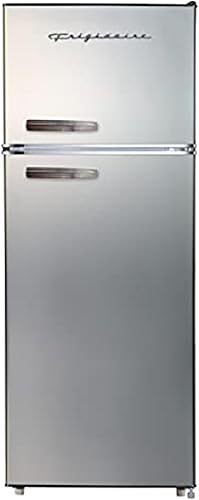
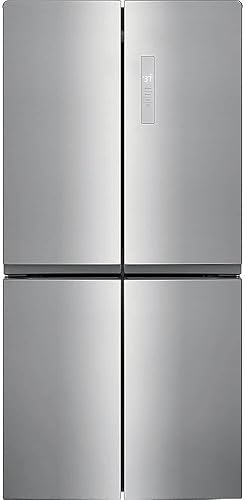
Refrigerator wattage varies widely. Small compact refrigerators (4-5 cu ft) often draw 80-120 watts while running. Mid-size models (7-10 cu ft) typically use 120-200 watts. Full-size French door or side-by-side units can draw 200-700 watts depending on features like ice makers and through-door dispensers. For instance, the Frigidaire EFR753-PLATINUM (7.5 cu ft, top freezer) is a mid-range model that likely falls around 150 watts running. On the high end, the Samsung RF18A5101SR/AA (18 cu ft, French door) with ice maker may peak near 600 watts. Always check the EnergyGuide label for exact annual kWh estimates.
How to Calculate Your Refrigerator's Energy Use
To estimate your fridge's energy cost, find the running wattage (often listed on the compressor or in the manual). Multiply by hours per day it runs (typically 8-12 for the compressor). Then divide by 1000 to get kWh per day. Multiply by 365 and your electricity rate (e.g., $0.13/kWh in the US). For example, a 150-watt fridge running 10 hours daily uses 1.5 kWh/day, or 547.5 kWh/year, costing about $71 annually. Smaller units like the Galanz GLR44BEER (4.4 cu ft) will be cheaper, while larger models like the Haier QHE16HYPFS (16.8 cu ft) will cost more to run.
What Affects Refrigerator Wattage the Most?
Several factors influence how many watts a refrigerator uses. Size and configuration matter: larger units with more cubic feet require more energy. French door models often use more than top-freezer designs due to additional heating elements and ice makers. Age and efficiency rating also play a role. A newer ENERGY STAR certified model can be 15-20% more efficient than a 10-year-old unit. Ambient temperature and door openings increase compressor run time. Placement matters too: leave space around the condenser coils for air circulation to avoid overworking the compressor.
Comparing Energy-Efficient Refrigerator Models
When shopping for a fridge, look for the yellow EnergyGuide label. Among the models above, the Frigidaire FRQG1721AV (5.5 cu ft) has a 4.3-star rating and is likely efficient for its size. The Frigidaire EFR753-PLATINUM (7.5 cu ft) is a popular choice with 586 reviews and a 4.1-star rating, suggesting good reliability. For a larger family, the Samsung RF18A5101SR/AA (18 cu ft) offers modern features but with 23 reviews it's less proven. The Galanz GLR44BEER (4.4 cu ft) is a budget-friendly option for small spaces. Always compare annual kWh on the label.
Does a Mini Fridge Use Fewer Watts?
Yes, compact refrigerators like the Galanz GLR44BEER (4.4 cu ft) typically use less power than full-size units, often 80-120 watts running. That translates to about 300-500 kWh per year, costing roughly $40-65 annually. However, some compact models are less efficient due to older compressor technology. The Summit Appliance AL55 (4.2 cu ft) is a built-in undercounter unit that may use similar power but has a low 2.0-star rating from 3 reviews. For a dorm or office, a compact fridge is a good energy saver, but check the EnergyGuide for exact numbers.
Long-Term Satisfaction: What Owners Say Months Later
Looking at customer review patterns, the Frigidaire EFR753-PLATINUM stands out with a 4.1-star rating across 586 reviews, indicating high long-term satisfaction. Owners often praise its quiet operation and consistent cooling with reasonable energy use. The Frigidaire FRQG1721AV also scores well (4.3 stars, 268 reviews). In contrast, the Summit AL55 (2.0 stars) and the higher-priced ZLINE models (2.9-3.6 stars) have fewer reviews and lower satisfaction, suggesting potential issues with reliability or energy performance. Choosing a well-reviewed model often correlates with better long-term efficiency and fewer service calls.
Tips to Reduce Refrigerator Energy Consumption
You can lower your fridge's wattage draw without buying a new unit. Keep the condenser coils clean (vacuum every 6 months). Check door seals for leaks (a dollar bill should not slide out easily when closed). Set the temperature between 37-40°F for the fridge and 0-5°F for the freezer. Allow hot foods to cool before placing them inside. Also, avoid overfilling, as blocked air vents reduce efficiency. If you're shopping, choose a model with automatic defrost (like the Galanz GLR44BEER) to prevent ice buildup that forces the compressor to work harder.
Frequently asked questions
How many watts does a refrigerator use per day?
A typical refrigerator uses 1,200 to 3,000 watt-hours per day (1.2 to 3 kWh). This equals 100-250 watts running for about 12 hours per day. A small compact model may use 1 kWh/day, while a large French door unit can use 3+ kWh/day.
How many watts does a refrigerator use when starting up?
Startup wattage (surge) can be 2-3 times the running watts for a few seconds. For example, a fridge that uses 200 watts running might draw 600 watts on startup. This is important for generator or inverter sizing.
How much does it cost to run a refrigerator per month?
At the average US electricity rate of $0.13/kWh, a fridge using 1.5 kWh/day costs about $5.85 per month. Larger models can cost $10-15 per month. Check your EnergyGuide label for precise estimates.
How many watts is a typical compact refrigerator?
Compact refrigerators (1.7-4.4 cu ft) typically use 60-120 running watts. The Galanz GLR44BEER (4.4 cu ft) likely runs around 80-100 watts. Annual energy use is usually 250-500 kWh.