How to Choose the Best Beverage Fridge for Your Space
A practical, jargon-free walk through capacity, cooling type, install location, temperature range and noise, so you buy a beverage fridge that actually fits.
Shopping for the best beverage fridge looks easy until you hit a wall of cubic-foot ratings, can-count claims, thermoelectric-versus-compressor cooling, and built-in-versus-freestanding labels that all matter more than they appear. Choose wrong and you end up with a unit that overheats in a cabinet, never gets truly cold, or rattles loud enough to hear from the next room.
This guide strips the decision down to the handful of factors that genuinely affect daily life: where it can safely go, how much it holds, how cold it gets and stays, and how quiet it is. Work through them in order and you will finish with a short list of models that fit your room, instead of a spec sheet you cannot decode.


Start with where it will live
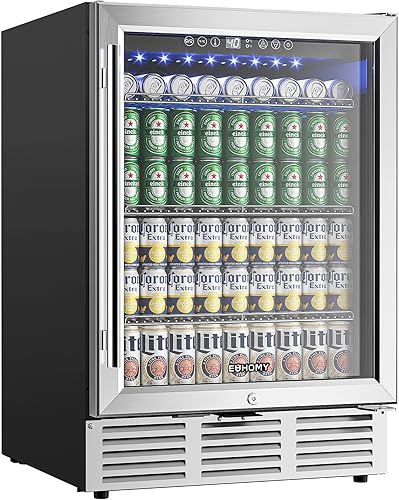
Before you look at capacity or cooling, decide the spot. Location dictates almost everything else. A fridge that sits in the open on a counter or against a wall is a freestanding unit, and it vents heat from the back or sides, so it needs a few inches of breathing room all around. A unit that slots under a counter or into cabinetry is a built-in (or undercounter) model, and it must vent from the front, because the back and sides are boxed in. This is the single most common buying mistake: dropping a freestanding fridge into a cabinet, where the trapped heat makes it run constantly, never reach temperature, and wear out early. Measure the opening, note your ventilation clearance, and confirm the listing actually says built-in or front-venting before you commit it to an enclosed spot. If it simply stands in a garage, basement bar, or office corner, a freestanding model is simpler and usually cheaper.
Capacity: count drinks, not just cubic feet
Cubic feet tells you the box size; the more useful number is how many of your drinks it actually holds. Compact countertop units around 1 to 2 cubic feet suit a dorm, office, or nightstand and hold a few dozen cans. Mid-size freestanding fridges in the 3 to 6 cubic foot range are the sweet spot for most homes, swallowing a couple of cases plus a few bottles. Large units in the 15 to 20 cubic foot range work as a full second fridge for a finished bar or heavy entertaining. Be skeptical of headline can counts: a 'holds 150 cans' claim usually assumes every shelf is removed and the box is packed wall to wall with a single can size. If you mix tall bottles, wide cans, and the occasional growler, plan for noticeably less than the marketing number, and favor adjustable or removable shelves so you can reconfigure as your stock changes.
Cooling type: thermoelectric vs compressor
Two technologies cool these fridges, and the difference shows up in real performance. Thermoelectric units are silent or near-silent, run without a vibrating compressor, and sip power, which makes them appealing for a bedroom or quiet office. The catch is that they can only pull the interior so far below room temperature, roughly 25 to 35 degrees Fahrenheit under ambient, so in a hot garage or a summer heatwave they may never reach a properly cold serving temperature. Compressor units work like a normal refrigerator: they cool far harder, hold temperature in warm rooms, and recover quickly after the door opens, at the cost of some hum and slight vibration. For most buyers who want drinks dependably cold year-round, a compressor model is the safer pick. Reserve thermoelectric for cool, climate-controlled rooms where near-silence beats a deep chill.
Temperature range and control
Check the actual temperature range, not just that a fridge has a dial. Most beverage units target a soda-and-beer range of roughly the high 30s to the low 50s Fahrenheit, which is warmer than a kitchen fridge by design, since you do not need drinks near freezing. If you also want to store white wine, look for a unit that reaches the low 40s and, ideally, a digital thermostat with a clear readout so you can dial in a precise number rather than guessing on a 1-to-7 knob. Dual-zone models split the interior into two independently set compartments, handy if you want sodas cold and reds at cellar temperature at once. Single-zone is fine, and cheaper, when everything inside wants the same temperature. Match the range to what you will actually store, then lean toward digital control for repeatable results.
Door, glass and lighting
Small touches affect both looks and running cost. Most beverage fridges use a glass door so you can see the contents, and better units fit double-paned, low-E glass that insulates well and resists condensation; a single-pane door in a humid room will sweat and make the compressor work harder. Decide whether you want clear glass that shows everything off for a bar setup, or a smoked or stainless-trimmed door that hides the clutter. Check whether the door is reversible if your layout needs it to swing the other way, an easy detail to miss until the fridge blocks a walkway. Interior LED lighting is now standard and worth having, though confirm you can switch it off if the unit lives somewhere the glow would distract. None of these are dealbreakers alone, but together they separate a fridge that looks and behaves well from one that fogs up and annoys you.
Noise, energy and reliability
Where the fridge lives decides how much noise matters. A compressor unit in a garage or party room rarely bothers anyone, but the same hum and occasional vibration in a bedroom or quiet study can grate, which is the strongest case for thermoelectric in those rooms. Look for a stated decibel rating and read owner feedback on vibration, since a poorly isolated compressor can buzz against a hard floor. On energy, beverage fridges are small but run constantly; an efficient model with good insulation and a double-paned door costs little to operate, while a cheap, poorly sealed unit in a warm room can surprise you on the power bill. Reliability tends to track brand record and review volume more than spec sheets, so weight models with a large body of consistent owner reviews over a flashy newcomer with a handful of ratings. A quietly competent fridge you forget about is the goal.
Matching a model to your situation
Pull it together by use case. For a busy household or entertainer who wants drinks reliably cold, a mid-size freestanding compressor unit in the 3 to 6 cubic foot range is the default, and a heavily reviewed, popular model is the low-risk way there. If you are building a bar or need a true second fridge, step up to a large 15-to-20 cubic foot freestanding unit and accept the footprint. For a kitchen or finished bar where the fridge must disappear under a counter, choose a built-in, front-venting model sized to the opening. And for a dorm, office, or bedside spot where silence and small size win, a compact thermoelectric or small compressor unit does the job without dominating the room. The four picks below from our beverage fridge lineup map directly to those situations, so you can shop a short list instead of the whole catalog.
Frequently asked questions
Can I put a freestanding beverage fridge inside a cabinet?
No. Freestanding units vent heat from the back or sides, so enclosing one traps that heat, makes it run constantly, and shortens its life. For a cabinet or under-counter spot, choose a built-in model that vents from the front.
Is thermoelectric or compressor cooling better for a beverage fridge?
Compressor cooling chills harder and holds temperature in warm rooms, making it the safer all-round choice. Thermoelectric runs near-silent and uses less power but cannot get as cold, so it suits cool, quiet rooms only.
How many drinks does a beverage fridge actually hold?
Far fewer than the headline can count, which usually assumes one can size packed wall to wall with shelves removed. Mixing bottles and cans cuts real capacity, so plan for noticeably less and favor adjustable shelves.
What temperature should a beverage fridge be set to?
Most sodas and beers sit comfortably in the high 30s to low 40s Fahrenheit. If you also store white wine, aim for a unit that reaches the low 40s with a digital thermostat, or choose a dual-zone model for two settings at once.