How to Choose a Refrigerator Without Overpaying
Choosing a refrigerator comes down to four decisions made in order: fit, capacity, configuration, and running cost, with features last.
Knowing how to choose a refrigerator is mostly about making decisions in the right order. Get the fit and capacity right first, then the configuration that matches how you shop and cook, then the running cost over the next decade, and only then the features. Do it the other way around and you end up paying for a through-the-door dispenser on a fridge that does not actually fit your kitchen.
This guide walks through each decision the way a careful buyer would, with the trade-offs spelled out plainly. By the end you should be able to look at any listing and tell within a minute whether it is a contender for your kitchen or a waste of your time.

Start with the space, not the fridge
Before you look at a single model, measure the opening where the refrigerator will live: width, height, and depth. Then add clearance. A fridge needs roughly an inch of breathing room on each side and at the top so heat can escape, plus enough depth that the door clears the cabinet and swings fully open. Measure the path it has to travel too: doorways, hallways, and any tight turn between the truck and the kitchen. Plenty of buyers fall in love with a model only to discover it will not clear the back door. Write your maximum dimensions down and treat them as hard limits. Any unit that does not fit inside those numbers, with clearance, is off the list no matter how good the price looks.
Pick the right capacity for your household
Refrigerator capacity is measured in cubic feet, and the rough rule is four to six cubic feet of fresh-food space per adult, with more if you cook from scratch, batch-cook, or shop in bulk. A couple is usually well served by something in the high teens, a family of four often wants the low-to-mid twenties, and a single person or a secondary kitchen fridge can be smaller. Bigger is not automatically better: an oversized fridge that runs half empty wastes energy and floor space, while a unit that is constantly jammed full chills unevenly because air cannot circulate. Aim for a size you will keep comfortably full but not packed, and remember that freezer space is part of the equation if you store a lot of frozen food.
Choose a configuration that matches how you shop
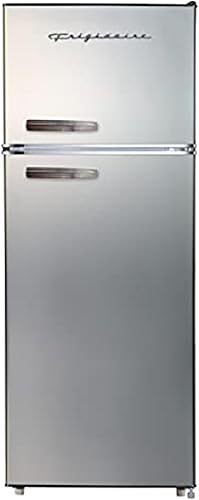
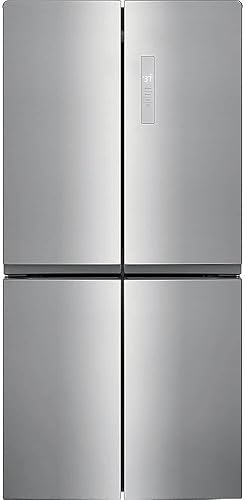
The four mainstream layouts each suit a different habit. Top-freezer models are the simplest, cheapest, and often the longest-lived, with generous fresh-food width at eye level; the trade-off is bending for frozen items. Bottom-freezer units flip that, putting everyday food at a comfortable height. Side-by-side fridges give you narrow but tall sections on both sides, which suits frequent freezer access but can be tight for wide platters. French-door models pair a wide fresh-food area on top with a bottom freezer drawer and tend to be the most flexible for families, at a higher price and with more parts to maintain. There is no universally best layout; the right one is whichever matches how often you reach for fresh versus frozen, and how wide the items you store actually are.
Counter-depth or standard depth
Standard-depth refrigerators stick out several inches past your countertops and give you the most interior volume for the money. Counter-depth models sit nearly flush with the cabinets for a built-in look and easier traffic flow, but you pay more and give up some usable space inside the same footprint. The decision is about priorities: if you want maximum storage per dollar and do not mind the fridge protruding, go standard depth. If a clean, integrated kitchen line matters to you and you are willing to trade a little capacity and budget for it, counter-depth earns its keep. Neither is wrong, so be honest about which one you will actually be happier with day to day.
Factor in running cost, not just the sticker price
A refrigerator runs continuously for its entire life, so its energy use is a real part of the price. An efficient current model can cost meaningfully less to run each year than an older or cheaply built one, and over a decade that gap can rival the difference between two purchase prices. Check the energy rating and the estimated annual consumption on the label, and weigh it alongside the upfront cost rather than chasing the lowest sticker. Configuration plays a role too: extra ice makers, dispensers, and dual cooling zones all add to the load. If two models fit and suit you equally, the more efficient one is usually the better long-term buy even if it costs a little more today.
Decide which features are worth paying for
Features should be the last filter, not the first. A through-the-door water and ice dispenser is convenient but adds parts that can fail and reduces shelf space. Dual ice makers, smart connectivity, and door-in-door compartments are genuinely useful to some households and pure cost to others. Adjustable and gallon-door shelving, a flexible deli drawer, and a quiet compressor are the kinds of practical features most buyers actually appreciate every day. Be ruthless: for each feature, ask whether you will use it weekly or whether it is just adding price and failure points. The simplest unit that does what you need will usually cost less to buy, less to run, and less to repair.
Put it all together and shortlist
Work the filters in order. Start with your hard size limits, drop anything that does not fit. Set your target capacity range and trim the rest. Pick the configuration and depth that match how you live. Compare the survivors on energy use and warranty, especially on the sealed system, since that is the expensive part to repair. Finally, add only the features you will genuinely use. What is left is a short, honest list of contenders. If you would rather skip the spec-by-spec slog, our refrigerators picks already apply these filters across current models, comparing capacity, configuration, price, and real buyer demand side by side so you can match the right unit to your kitchen quickly.
Frequently asked questions
What size refrigerator do I need?
Plan for about four to six cubic feet of fresh-food space per adult, adjusting up if you cook from scratch or shop in bulk. A couple is usually fine in the high teens of cubic feet, while a family of four often wants the low-to-mid twenties. Choose a size you will keep comfortably full but not jammed.
Is counter-depth or standard-depth better?
Standard-depth gives the most interior space for the money but sticks out past your counters. Counter-depth sits nearly flush for a built-in look and easier traffic, but costs more and offers slightly less usable volume. Pick based on whether maximum storage or a clean kitchen line matters more to you.
Which refrigerator configuration lasts the longest?
Top-freezer and bottom-freezer models are generally the longest-lived because they have the fewest parts to fail. Side-by-side and French-door units add dispensers, dual ice makers, and more electronics, which are convenient but create more components that can eventually need service.
Does refrigerator energy efficiency really matter?
Yes. A fridge runs continuously for its whole life, so a more efficient model can save a meaningful amount each year. Over a decade those savings can rival the price difference between two units, so it is worth comparing the estimated annual energy use on the label, not just the purchase price.