How to Tap a Keg in a Kegerator: A Complete Guide
Tapping a keg in a kegerator is simple once you know the steps. This guide covers chilling, connecting gas and beer lines, and adjusting CO2 for a perfect pour every time.
To tap a keg in a kegerator, first chill the keg to serving temperature (38-42°F), then connect the CO2 tank, attach the keg coupler, and pull the handle to pressurize. Once sealed, open the faucet to pour.
Whether you are a homebrewer or just want fresh draft beer at parties, knowing how to tap a keg in a kegerator ensures you get the most out of your equipment. This article walks through each step, from setup to troubleshooting common issues, so you can enjoy consistent pours and happy guests.


Chill the Keg Before Tapping
A warm keg will foam excessively. Place the keg in the kegerator at least 12-24 hours before tapping. The ideal serving temperature for most beers is 38-42°F. If you are impatient, use a keg coil or ice bath to speed chilling. Never tap a warm keg, as the CO2 will absorb poorly and create messy pours.
Connect the CO2 Tank and Regulator
Ensure the CO2 tank valve is closed. Attach the regulator to the tank and tighten with a wrench. Set the regulator to the recommended pressure for your beer style (typically 10-14 PSI). Open the tank valve slowly and check for leaks with soapy water. A properly connected CO2 system prevents flat beer and keeps the keg pressurized.
Attach the Keg Coupler
Identify your keg type (D coupler for most domestic US kegs, S coupler for some imports). Make sure the coupler handle is in the up (vent) position. Align the coupler over the keg neck and push down firmly, then turn clockwise to lock. You should hear a click. This step secures the connection for both gas and beer lines.
Connect the Gas and Beer Lines
Attach the gas line from the regulator to the gas inlet on the coupler. Then connect the beer line from the coupler to the tower shank or faucet. Use a wrench to ensure tight connections. For dual-tap kegerators like the Kegco K209SS-2, repeat for each keg. This setup delivers CO2 to the keg and beer to the faucet.
Purge Air and Pressurize
With the coupler handle still up, open the CO2 tank valve. You will hear air escaping from the vent. After 5 seconds, push the coupler handle down to seal. This purges oxygen and pressurizes the keg. Wait 30 seconds for the pressure to stabilize before pouring. This step is critical to avoid foamy first pours.
Pour the First Beer
Open the faucet fully and quickly. A slow pour causes foam. Tilt your glass at a 45-degree angle and straighten as it fills. If the first glass is foamy, wait a minute and try again. Adjust CO2 pressure if needed, too high causes foam, too low makes beer flat. For best results, use a clean glass and pour at the correct angle.
Troubleshoot Common Issues
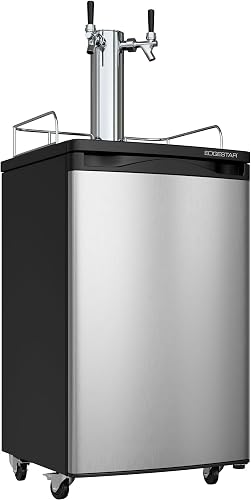
If beer pours foam, check temperature (too warm?), CO2 pressure (too high?), or line length (too short?). If no beer comes out, ensure the coupler is fully locked and the keg is not empty. If beer tastes off, clean your lines regularly. Most kegerators like the EdgeStar KC2000SSTWIN recommend line cleaning every 2-4 weeks.
Frequently asked questions
How long does it take for a keg to get cold in a kegerator?
It takes about 12-24 hours for a full keg to reach serving temperature (38-42°F) in a kegerator. Smaller or partially full kegs may chill faster. Using a keg coil can speed this up.
What PSI should I set my kegerator to?
Most beers pour well at 10-14 PSI. Lighter beers like lagers use lower PSI, while stouts and higher carbonated styles use higher PSI. Check the beer's recommended serving pressure if available.
Why does my first pint pour foamy?
Foamy first pours are normal due to temperature or pressure imbalance. Chill the keg fully, purge air from the keg before tapping, and let the pressure stabilize for 30 seconds after connecting. Pour quickly with a tilted glass.
How often should I clean my kegerator lines?
Clean beer lines every 2-4 weeks to prevent bacterial buildup and off flavors. Use a line cleaning kit with a cleaning solution, then rinse thoroughly. More frequent cleaning is needed if you switch beer styles often.