Is It Safe to Eat Food Left Out Overnight?
Learn the hard food safety rules about leaving food out overnight, why the two-hour rule matters, and how the right refrigerator can help prevent waste and keep your family safe.
No, it is not safe to eat food left out overnight. The USDA and FDA both state that perishable food should not sit at room temperature for more than two hours. After that, bacteria like Staphylococcus aureus and Salmonella can multiply to dangerous levels, even if the food looks and smells fine. The risk applies to cooked meats, dairy, eggs, sliced fruits, and any leftovers. So if you forgot to put the pizza or takeout away before bed, it's best to toss it.
Knowing whether it is safe to eat food left out overnight can save you from a nasty case of food poisoning. But the best way to avoid the dilemma is to refrigerate leftovers promptly. That's where having a reliable refrigerator comes in. Models with good temperature control and enough capacity make it easy to store food quickly after meals. Below, we'll break down the safety guidelines, common myths, and how to choose a fridge that helps you follow them.


The 2-Hour Rule Explained
The two-hour rule is simple: perishable food left out at room temperature for more than two hours should be discarded. If the room is above 90 degrees F (like a hot kitchen or outdoor picnic), the window shrinks to one hour. Bacteria grow fastest between 40 and 140 degrees F, the danger zone. Even if you reheat the food to kill bacteria, some toxins they produce are heat-stable. That's why food left out overnight is a gamble you shouldn't take. Always put leftovers in the fridge within two hours to stay safe.
Can You Smell or See Spoilage?
Many people rely on their nose or eyes to decide if food is safe. But harmful bacteria can multiply without changing the taste, smell, or appearance of food. Pathogens like Listeria and E. coli are invisible. By the time food smells off, it's likely already teeming with microbes. The only reliable way to prevent spoilage is to keep food cold. A refrigerator that maintains a steady 37 to 40 degrees F is your best defense. If you're unsure how long something has been out, the safest call is to throw it away.
Foods That Are More Risky
Some foods are especially dangerous when left out overnight. Cooked meat, poultry, seafood, eggs, dairy products, soft cheeses, sliced melons, cooked vegetables, and any moist dishes like casseroles or soups are high-risk. These foods provide a perfect environment for bacteria. Dry foods like bread, crackers, or whole fruits are less risky, but still not recommended to leave out indefinitely. When in doubt, refrigerate. A fridge with ample shelf space and clear organization helps you store leftovers promptly without clutter.
How Refrigeration Stops Bacteria Growth
Refrigeration slows bacterial growth dramatically. At 40 degrees F or below, most bacteria reproduce very slowly or stop altogether. That's why it's critical to get leftovers into a properly functioning fridge quickly. Automatic defrost models help maintain consistent temperatures and reduce ice buildup that can make the fridge work harder. If your fridge struggles to stay cold, it may be time to upgrade. Look for models with digital temperature controls and good insulation to keep food safe.
Common Myths About Overnight Food
One myth is that reheating food kills all bacteria, making it safe. As mentioned, heat-stable toxins can remain. Another myth is that acidic foods like pizza or tomato sauce are safe longer. Not true: they are still perishable. Some think that if food was left out just a few hours past the limit, it's fine. But bacteria can double in as little as 20 minutes in the danger zone. The only sure way is to follow the two-hour rule. Don't rely on myths; rely on your fridge.
Choosing a Fridge for Better Food Safety
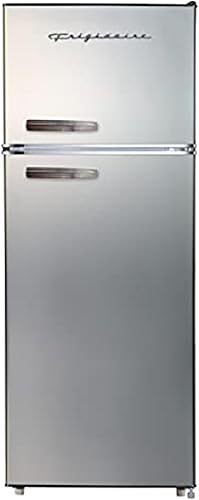
A reliable refrigerator makes it easier to follow food safety rules. Look for one with consistent temperature control, enough capacity, and easy access. For smaller kitchens, a compact model like the Galanz GLR44BEER (4.4 cu ft, $259.99, 3.9 stars) works well for beverages and small leftovers. For families, the Frigidaire EFR753-PLATINUM (7.5 cu ft, $329, 4.1 stars across 586 reviews) offers a top freezer and manual defrost at a great value. Larger households might prefer the Samsung RF18A5101SR/AA (18 cu ft, $1299, 3.9 stars) with french doors and frost-free operation. Whichever you choose, proper refrigeration is your best ally.
Final Takeaway: When in Doubt, Throw It Out
The bottom line: it is never safe to eat food left out overnight. The two-hour rule is backed by science, and ignoring it can lead to food poisoning. To avoid waste, make it a habit to refrigerate leftovers immediately after serving. A good refrigerator helps you do that with consistent temperatures and smart storage. If you find yourself frequently asking "is it safe to eat food left out overnight?" the answer is no. Trust the rule, not your senses, and keep your fridge running at peak performance.
Frequently asked questions
Can I reheat food that was left out overnight to make it safe?
No, reheating kills bacteria but not heat-stable toxins they produce. These toxins can still cause food poisoning. Always discard food left out more than 2 hours.
How long can pizza sit out before it goes bad?
Pizza should be refrigerated within 2 hours. After that, bacteria like Staphylococcus aureus can multiply. If left out overnight, it is not safe to eat.
What temperature should my refrigerator be to keep food safe?
Your refrigerator should be set to 40 degrees F (4 degrees C) or below. Use a thermometer to verify, as built-in dials can be inaccurate.
Is it safe to eat food left out overnight if it was covered?
No, covering food does not prevent bacterial growth. Bacteria thrive in the danger zone regardless of a cover. Always follow the 2-hour rule.