How Loud Is Too Loud? A Refrigerator and Mini-Fridge Noise Guide
Decibel ratings finally explained in plain English, so noise-sensitive buyers pick the right cooling type instead of returning a humming fridge.
If you have ever stood in a quiet kitchen and noticed the fridge droning away, you already understand why quiet refrigerator decibels matter. Most full-size refrigerators land somewhere between 32 and 47 dBA, and a difference of just a few decibels is the gap between background white noise and a hum you cannot ignore. The catch is that the number on the spec sheet only tells half the story. The other half is the cooling technology inside, because a compressor and a thermoelectric cooler make completely different kinds of sound at completely different volumes.
This guide breaks down what the decibel rating actually measures, where common units fall on the scale, and why a beverage fridge or wine cooler may hum louder than you expect. By the end you will know how to read a noise spec, when to chase a lower number, and which cooling type to shop for if silence is your priority.

What a Refrigerator Decibel Rating Actually Measures
A decibel (dB) rating describes sound pressure, and appliance specs usually quote it as dBA, the A-weighted scale that mimics how human ears perceive loudness. The first thing to understand is that decibels are logarithmic, not linear. An increase of 10 dBA represents roughly a tenfold jump in sound energy and is heard as about twice as loud. That is why a 35 dBA fridge and a 45 dBA fridge feel worlds apart even though the numbers look close.
For reference, a quiet library sits near 30 dBA, a soft whisper around 30 to 40 dBA, and normal conversation around 60 dBA. A refrigerator rated at 38 dBA fades into the background of a typical kitchen, while one rated 47 dBA becomes noticeable the moment the room goes quiet. Manufacturers measure these figures under lab conditions, so treat the rating as a comparison tool between models rather than a promise of what you will hear in your own home.
Where Fridges and Mini-Fridges Fall on the Decibel Scale
Full-size refrigerators are generally the quietest category relative to their size because they have room for larger, better-insulated compressors and sound-dampening cabinets. Many modern French-door and top-freezer models advertise figures in the high 30s to low 40s dBA.
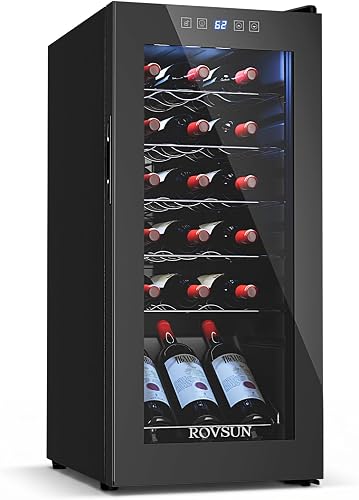
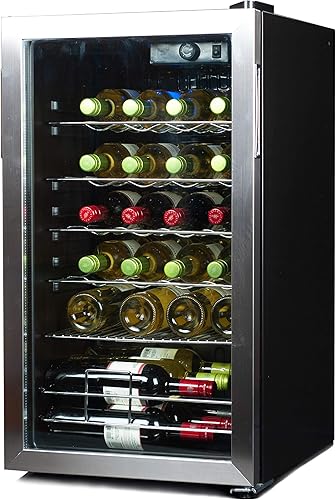
Mini-fridges, beverage fridges, and wine coolers are trickier. Their compact cabinets leave little space for insulation around the cooling unit, so a small compressor sitting close to thin walls can transmit more vibration into the room. It is common to see these units rated in the low to mid 40s dBA, and some budget models run higher. Counterintuitively, the smallest appliance in your home can be the loudest one in a quiet bedroom or office, which is exactly why noise-sensitive buyers should read the spec on compact units even more carefully than on a large kitchen fridge.
Compressor vs. Thermoelectric: The Real Source of the Hum
The single biggest factor in how a fridge sounds is its cooling method. Compressor cooling, the same vapor-compression technology in your kitchen refrigerator, uses a motor-driven pump to circulate refrigerant. It is powerful and can hold cold temperatures even in a warm room, but the motor produces a low-frequency hum plus occasional clicks and gurgles as it cycles on and off.
Thermoelectric cooling works differently. It uses a solid-state Peltier element and a small fan instead of a compressor, so there is no motor and no refrigerant cycling. The result is a much quieter, more constant sound dominated by gentle fan noise, often in the low 30s dBA. The trade-off is capacity: thermoelectric units can usually only chill the interior to about 18 to 22 degrees Fahrenheit below room temperature and struggle in hot environments. If near-silence matters more than deep cooling, thermoelectric wins. If you need reliable cold in a warm room or a larger interior, a compressor is the practical choice even though it hums.
Why Beverage and Wine Units Often Hum Louder Than You Expect
Buyers are frequently surprised that a small beverage fridge or wine cooler can be louder than their big kitchen refrigerator. There are three reasons for this. First, most mid and large-capacity beverage and wine units use compressors rather than thermoelectric cooling, because wine and drinks benefit from steady, deep cold that a Peltier element cannot reliably deliver. Second, the compact cabinet offers little insulation to muffle the motor. Third, these units are often placed in living rooms, home offices, or bedrooms, quiet spaces where any hum stands out, rather than a busy kitchen.
This is the core decision for noise-sensitive shoppers. A thermoelectric wine cooler or beverage fridge will be whisper-quiet but holds fewer bottles and cools less aggressively. A compressor model holds more, chills colder, and runs in warm rooms, but it will hum. Knowing which you are buying before you order prevents the most common reason these units get returned: the new owner was expecting silence and got a hum instead.
How to Read a Noise Spec Before You Buy
Start by finding the dBA figure in the product specifications. If it is listed, use it to compare similar models rather than as an absolute guarantee. Remember the logarithmic scale: a 39 dBA unit is meaningfully quieter than a 44 dBA one, not just slightly.
If no decibel rating is published, fall back on the cooling method. A listing that mentions thermoelectric or Peltier cooling will almost always run quieter than a compressor model of similar size. Then read owner reviews specifically for words like hum, buzz, vibration, rattle, and clicking. Real-world reviews surface noise complaints that lab ratings never capture, especially intermittent sounds from a cycling compressor. Finally, factor in placement: a unit destined for a bedroom or a quiet study deserves a stricter noise standard than one going in a garage or laundry room.
Quieting Strategies and Realistic Expectations
Even a compressor unit can be made noticeably more tolerable. Make sure the appliance sits perfectly level so the compressor does not vibrate against the floor, and leave the manufacturer-recommended clearance around the back and sides so the cooling system is not working harder than it needs to. Placing the unit on a solid, flat surface rather than a hollow or springy floor reduces transmitted vibration, and a small anti-vibration mat can help with persistent buzz.
Set realistic expectations too. No compressor fridge is truly silent; it will cycle on and off throughout the day, and that is normal operation, not a defect. If you genuinely cannot tolerate any motor hum in the room, the honest answer is to choose a thermoelectric unit and accept its smaller capacity and milder cooling. Matching the technology to your noise tolerance up front is far more effective than trying to silence the wrong appliance after it arrives.
Picking the Right Cooling Type for Your Space
Put it all together by working backward from the room. For a primary kitchen refrigerator, prioritize a low published dBA rating; you are stuck with a compressor at this size, so chase the quietest one you can afford. For a bedroom mini-fridge or a home-office beverage unit where silence is the point, lean toward thermoelectric cooling and verify it in the reviews. For a wine collection you intend to age, accept that a compressor's steady cold is worth the hum, and place the unit where the noise will not bother you, then look for models reviewers describe as quiet for their class. The right buy is rarely the cheapest or the largest. It is the one whose noise profile matches the room it will live in.
Frequently asked questions
What is a good decibel rating for a quiet refrigerator?
Anything around 38 dBA or below is genuinely quiet for a full-size fridge and will fade into the background of most kitchens. For a compact unit in a bedroom or office, look for the low 40s or, ideally, a thermoelectric model that runs in the low 30s.
Why is my mini-fridge louder than my kitchen refrigerator?
Compact units have little room for insulation around the compressor, so the motor's vibration transfers into the room more easily. They are also often placed in quiet spaces like bedrooms where any hum stands out, unlike a busy kitchen.
Are thermoelectric fridges really quieter than compressor models?
Yes. Thermoelectric units use a solid-state cooling element and a small fan instead of a motor-driven compressor, so they produce a steady, gentle fan sound with no cycling hum. The trade-off is weaker cooling and smaller capacity.
Is it normal for a refrigerator to hum on and off?
Yes. A compressor cycles on to cool and off once the target temperature is reached, so intermittent humming, clicking, and occasional gurgling are normal operation. Loud rattling or a sudden change in pitch is worth investigating, but a soft cyclical hum is not a defect.