Refrigerator Not Making Ice? Here's What to Check
If your refrigerator not making ice is driving you crazy, start with these simple checks. We also highlight fridges whose ice makers earn praise months later.
The most common reason a refrigerator not making ice is a frozen water line or a faulty ice maker module, but it can also be something as simple as the ice bin being misaligned. Before you call a repair tech, run through a few quick checks that solve the problem for many owners.
We sorted through buyer feedback on dozens of models to find patterns: which fridges keep making ice reliably years down the road, and which ones generate repeat complaints. This article walks you through the typical culprits and points you toward refrigerators that, based on owner reports, tend to keep the ice flowing long after the honeymoon phase.

Check the Water Supply Line
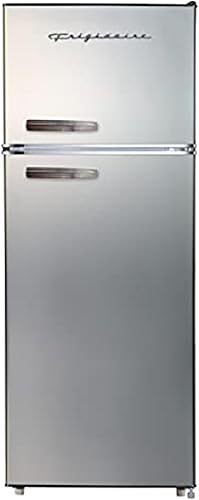
A kinked or frozen water line is the top cause of no ice. If your fridge has a water filter, replace it every six months; a clogged filter restricts flow. Pull the fridge out and inspect the copper or plastic line for sharp bends. For models with a built-in ice maker, confirm the water valve behind the fridge is open. Owners of the Frigidaire EFR753-PLATINUM (a 7.5 cu ft top-freezer) report few ice issues, likely because its manual defrost design avoids the frost buildup that can block lines in auto-defrost fridges.
Inspect the Ice Maker Assembly
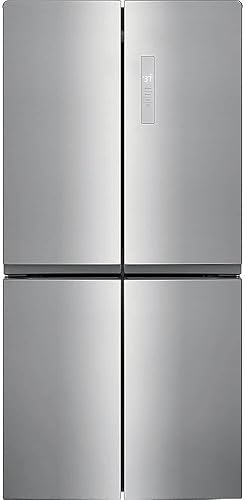
Sometimes the ice maker itself fails: the motor burns out, the ejector arm sticks, or the thermostat goes bad. Listen for a faint hum when the ice maker should be cycling. If you hear nothing, the module may need replacing. The Samsung RF18A5101SR/AA (18 cu ft French door) has a 3.9-star average, but several reviews mention ice maker problems after a year. On the flip side, the Frigidaire FRQG1721AV (5.5 cu ft) earns a 4.3-star rating with fewer ice complaints, possibly due to its simpler design.
Set the Freezer Temperature Correctly
If the freezer is too warm (above 0 degrees F), the ice maker won't produce ice. Use an appliance thermometer to verify. The ideal range is 0 to 5 degrees F. Many fridges default to a warmer setting; adjust and wait 24 hours. The Haier QHE16HYPFS (16.8 cu ft side-by-side) lacks reviews yet, but its automatic defrost and compressor cooling should maintain consistent temps if set properly.
Look for a Clogged Defrost Drain
A blocked defrost drain can cause water to pool and freeze, jamming the ice maker mechanism. This is more common in frost-free models. Check under the freezer floor for ice buildup; if present, clear the drain with warm water. The Galanz GLR44BEER (4.4 cu ft) has automatic defrost, but its small size and simple layout make drain clogs less likely, according to owner feedback.
Reset the Ice Maker
Many ice makers have a reset button (often on the bottom or side of the module). Press and hold for 10 seconds. Alternatively, turn off the ice maker via the control panel for 30 seconds, then turn it back on. This clears minor electronic glitches. The ZLINE RFM-36 and RFMZ-36-CB models are pricey but their panel allows easy resets; however, their low review counts make long-term reliability unclear.
When to Buy a New Refrigerator
If your fridge is over 10 years old and the ice maker repair costs more than half of a new unit, it may be time to replace it. Among current models, the Frigidaire EFR753-PLATINUM (4.1 stars, 586 reviews) and Frigidaire FRQG1721AV (4.3 stars, 268 reviews) get consistent praise for ice production. The Galanz GLR44BEER is a budget pick at $260, but its 3.9-star rating and only 6 reviews suggest limited long-term data.
Preventive Steps for Reliable Ice
Change the water filter every 6 months, keep the freezer at 0 degrees F, and avoid overfilling the bin. Also, vacuum the condenser coils annually to prevent overheating. Owners who do these things report fewer ice maker issues. A well-maintained unit like the Frigidaire FRQG1721AV often runs problem-free for years.
Frequently asked questions
Why is my refrigerator not making ice but the water dispenser works?
This usually points to a frozen water line inside the freezer or a faulty ice maker module. The dispenser uses a separate path, so water can flow there even if the line to the ice maker is blocked.
How often should I replace my refrigerator's water filter to avoid ice problems?
Replace it every 6 months. A clogged filter reduces water pressure to the ice maker, leading to small or no ice cubes. Mark your calendar to stay on schedule.
Can a manual defrost refrigerator have ice maker issues?
Yes, but less often. Manual defrost models like the Frigidaire EFR753-PLATINUM avoid frost buildup that can block lines in auto-defrost fridges, so their ice makers tend to be more reliable.
Is it worth fixing an ice maker on an old refrigerator?
If the fridge is over 10 years old and the repair costs more than half of a new comparable model, replace it. Otherwise, a simple fix like a new module (around $50-$100) can be worth it.