What Are Standard Refrigerator Dimensions?
Understanding standard refrigerator dimensions helps you choose a model that fits your kitchen layout and storage needs. This guide covers common sizes, installation types, and key measurements to consider before buying.
Standard refrigerator dimensions vary by configuration and installation type, but most fall into predictable ranges. For freestanding models, width is typically 30 to 36 inches, depth 30 to 34 inches, and height 66 to 72 inches. Counter-depth refrigerators are shallower, around 24 to 30 inches deep, to align with cabinetry. Compact and undercounter units are narrower, often 18 to 24 inches wide.
Knowing these standard refrigerator dimensions helps you narrow down choices and avoid costly return fees. Whether you are replacing an old fridge or designing a new kitchen, understanding height, width, and depth requirements ensures a smooth install. This guide breaks down common sizes by type, so you can match dimensions to your space and lifestyle.

Why Standard Refrigerator Dimensions Matter
Buying a fridge that doesn't fit is a headache no one wants. Standard refrigerator dimensions give you a baseline to measure your space against. A typical freestanding model needs about 30 to 36 inches of width, but if your opening is tighter, you might need a compact or undercounter unit. Depth is just as critical: a standard fridge sticks out 30 to 34 inches, while counter-depth models sit flush with cabinets for a built in look. Height varies too, from 66 inches for smaller units to 72 inches for full size. Always measure your doorways and kitchen space, accounting for clearance for door swing and airflow. Skipping this step can lead to a fridge that blocks traffic or won't fit through the door.
Freestanding Refrigerator Dimensions
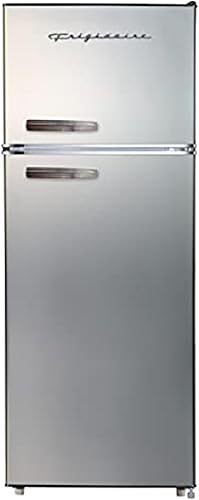
Freestanding refrigerators are the most common type and come in a wide range of standard sizes. Typically, widths span 28 to 36 inches, with 30, 33, and 36 inches being most popular. Depth runs 30 to 34 inches, and height is usually 66 to 72 inches. The Frigidaire EFR753-PLATINUM, a 7.5 cu ft top freezer model, measures about 28.5 inches wide, 30.5 inches deep, and 65.5 inches tall, fitting into the smaller end of this range. For larger households, the Samsung RF18A5101SR/AA at 18 cu ft is 30 inches wide, 29 inches deep, and 68 inches tall, a classic French door footprint. Always verify exact specs because exterior handles and hinges add depth.
Counter-Depth Refrigerator Dimensions
Counter-depth refrigerators are designed to align with standard kitchen countertops, which are typically 24 to 25 inches deep. Their dimensions are shallower than freestanding models, usually 24 to 30 inches deep, with widths from 30 to 36 inches and heights from 66 to 72 inches. The Samsung RF18A5101SR/AA is a counter-depth model at 29 inches deep (just over standard counter depth but still flush with cabinetry). These fridges offer a seamless look but often have less interior capacity per footprint. If you want a built in appearance without custom cabinetry, counter depth is the way to go. Just remember that shallower depth means you may need to adjust shelves or store items differently.
Compact and Undercounter Refrigerator Dimensions
Compact refrigerators are ideal for small spaces, dorm rooms, offices, or as secondary units. They typically measure 18 to 24 inches wide, 20 to 24 inches deep, and 32 to 35 inches tall. The Galanz GLR44BEER is a 4.4 cu ft freestanding compact fridge measuring 21.73 inches wide, 24.29 inches deep, and 35.43 inches tall, fitting under a standard counter with some clearance. Undercounter models like the Summit Appliance AL55 (4.2 cu ft) are designed to slide under countertops, with heights around 34 inches, depths of 22 inches, and widths of 18 to 24 inches. These require ventilation space, so check installation guidelines. Compact dimensions are perfect when every inch counts.
How to Measure Your Space for a Refrigerator
Before you shop, measure the width, depth, and height of your opening. For width, measure from wall to wall at the widest point. For depth, measure from the back wall to the front edge of the counter or cabinetry. For height, measure from the floor to the bottom of any upper cabinets or soffit. Add at least 1 inch of clearance on each side for airflow and door swing. Also measure doorways and hallways to ensure the fridge can be delivered. Don't forget to check if the refrigerator doors need extra swing space to open fully. Compare these numbers to the standard refrigerator dimensions of models you like. The Frigidaire FRQG1721AV (5.5 cu ft) has a smaller footprint and may fit tighter spaces.
Common Refrigerator Widths and What Fits
The most common refrigerator widths are 28, 30, 33, and 36 inches. A 28-inch wide model like the Frigidaire EFR753-PLATINUM fits in galley kitchens or narrower openings. Thirty inches is the sweet spot for many French door and side by side fridges, such as the Samsung RF18A5101SR/AA. Thirty-three inch widths are less common but appear on some side by sides. Thirty-six inch widths are standard for larger freestanding units and built in models, like the ZLINE Kitchen and Bath RFM-36 (though its exact width should be checked). If space is tight, consider compact models like the Galanz GLR44BEER at 21.73 inches wide. Always verify actual dimensions because handles can add width.
Matching Dimensions to Refrigerator Types
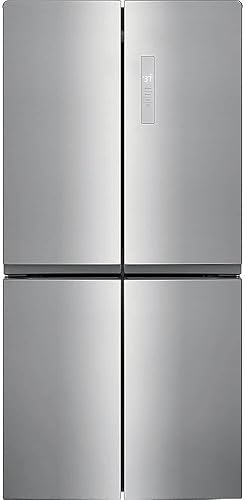
Different refrigerator types have distinct standard dimensions. Top freezer models, like the Frigidaire EFR753-PLATINUM, are usually 28-30 inches wide and 65-67 inches tall. French door models, like the Samsung RF18A5101SR/AA, are 30-36 inches wide and 68-72 inches tall. Side by side models, such as the Haier QHE16HYPFS, are 30-36 inches wide and 66-70 inches tall. Compact and undercounter units, including the Galanz GLR44BEER and Summit Appliance AL55, are narrower and shorter. Matching the type to your space ensures you get the layout you want. For example, a counter-depth French door offers a streamlined look but may require a wider opening. Use the dimensions as a guide, but always check the product specs for exact numbers.
Frequently asked questions
What is the standard width of a refrigerator?
The most common refrigerator widths are 30, 33, and 36 inches for full-size models. Compact units can be 18 to 24 inches wide. Always check the exact width including handles and hinges.
How deep is a standard counter-depth refrigerator?
Counter-depth refrigerators are typically 24 to 30 inches deep, with many around 29 inches. This depth aligns with standard kitchen countertops (24-25 inches) plus a slight overhang.
What are the dimensions of a compact refrigerator?
Compact refrigerators usually measure 18 to 24 inches wide, 20 to 24 inches deep, and 32 to 35 inches tall. The Galanz GLR44BEER is 21.73 x 24.29 x 35.43 inches.
Can a standard fridge fit in a 30-inch opening?
Yes, many standard refrigerators are designed for a 30-inch opening. Models like the Samsung RF18A5101SR/AA are exactly 30 inches wide. But measure carefully because handles can add width.