Why Is My Kegerator Beer Foamy? Top Causes & Solutions
Foamy beer from your kegerator is frustrating but fixable. This guide covers the most common causes, from temperature to pressure, and how to get back to perfect pours.
Foamy beer from your kegerator is almost always caused by one of a few common issues: temperature too warm, CO2 pressure too high or too low, dirty beer lines, or a bad pour technique. The first step is to check your kegerator's temperature setting and verify it's holding around 38 degrees F. If the beer is too warm, CO2 comes out of solution too quickly, creating foam. Next, check your CO2 pressure. Most beers pour best between 10 and 14 PSI, but it depends on the beer style and line length. If those are correct, clean your beer lines. Residual yeast and bacteria can cause excessive foaming. Finally, make sure you're opening the faucet fully and pouring at a steady angle.
Why is my kegerator beer foamy? It's a common question among home draft enthusiasts, and the answer usually involves a simple adjustment. By following a systematic troubleshooting approach, you can quickly identify the culprit and get back to enjoying a crisp, clear pint. This guide walks through each potential cause and the fixes that work best based on real owner experiences and technical specs.


Check the Temperature First
The most frequent reason for foamy beer is temperature that is too high. Beer holds carbonation best at 36 40 degrees F. If your kegerator is set warmer, CO2 escapes rapidly from the beer as you pour, creating excessive foam. Use a thermometer to verify the actual beer temperature inside the keg, not just the dial reading. Many kegerators have temperature control, but some models like the Kegco K209SS-1 (4.2 stars, 68 reviews) allow precise adjustment. If your unit doesn't hold steady temperature, it may need service. A rule of thumb: if the keg feels warm to the touch, the beer will foam.
Inspect CO2 Pressure Settings
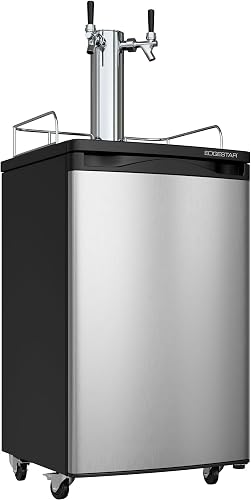
Incorrect CO2 pressure is a common culprit. Too much pressure over carbonates the beer, causing foam. Too little pressure allows CO2 to come out of solution. Start by checking your regulator gauge. For most beers, 12 PSI is a good baseline, but adjust based on line length and temperature. If your kegerator has a short beer line (under 5 feet), lower pressure to 10 PSI. If the line is long, you may need 14 PSI. The EdgeStar KC2000SSTWIN (4.4 stars, 744 reviews) is a popular choice with good temperature control. Turn off the gas, purge the keg, then reset pressure to the correct level and wait 24 hours before testing.
Clean the Beer Lines Regularly
Dirty beer lines are a hidden cause of foam. Over time, yeast, bacteria, and beer stone build up inside the lines, creating nucleation points where CO2 bubbles form rapidly, resulting in foam. Clean your lines every 4 to 6 weeks using a line cleaning kit with a recirculating pump. If you've never cleaned them, that's likely your issue. Many owners of the Kegco K209SS-2 (4.5 stars, 27 reviews) report better pours after cleaning. The process takes about 30 minutes and involves flushing with a cleaning solution followed by sanitizer. After cleaning, run beer through until it pours clear. You'll notice an immediate improvement in foam control.
Evaluate Your Pouring Technique
Sometimes the problem is not the kegerator but how you pour. A common mistake is tilting the glass too much or opening the faucet slowly. Always hold the glass at a 45 degree angle and open the faucet fully in one quick motion. As the glass fills, slowly straighten it. This allows the beer to flow smoothly and reduces foam. Also, make sure the glass is clean and free of detergent residue, which can cause bubbles. If you're still getting foam, try a different glass. Some users of the Kegco K209SS-1 find that using a properly cleaned glass makes a big difference.
Verify Faucet and Tower Components
A worn faucet or warm tower can cause foamy beer. If your kegerator has a tower, the beer line inside may be warm, especially if the tower is not cooled. Some towers have a fan or insulation; if yours doesn't, consider adding a tower cooling kit. Also check the faucet for debris or damage. The Kegco K209SS-2 (4.5 stars) has a stainless steel tower that helps with temperature. If the faucet drips or doesn't close fully, replace the seal. A simple faucet rebuild kit costs under $20 and can solve persistent foam issues.
When to Consider a New Kegerator
If you've tried temperature, pressure, cleaning, technique, and hardware fixes and still get foam, the kegerator itself may be inadequate. Some budget units have poor temperature regulation or short lines that can't be adjusted. At that point, upgrading to a model with better reviews and features makes sense. The EdgeStar KC2000SSTWIN (4.4 stars, 744 reviews) is a reliable choice. For heavy use, the Kegco K209SS-2 (4.5 stars, 27 reviews) offers dual faucets and good build quality. Read owner reviews to see which models hold temperature well and have minimal foam complaints.
Other Quick Fixes to Try
Before you give up, try these: turn off the CO2 and gently rock the keg to release excess carbonation, then reattach gas. Check that the coupler is fully engaged and not leaking. Make sure the keg is not overfilled. Also, consider that the beer itself might be overcarbonated from the brewery. In that case, let the keg sit at serving temperature for 24 hours before tapping. If you have a dual-tap kegerator like the Kegco K209SS-2, try a different keg to see if the issue follows the beer or the tap. Most foam problems are simple to fix once you systematically check each element.
Frequently asked questions
Why is my kegerator beer foamy even after adjusting temperature?
If temperature is correct, check CO2 pressure. Too high or too low pressure causes foam. Also clean lines, as dirty lines create nucleation points. Finally, inspect the faucet and tower for warmth or damage.
What PSI should I set my kegerator for less foam?
Start at 12 PSI for most beers. If lines are short (under 5 ft), use 10 PSI; longer lines may need 14 PSI. Let it stabilize 24 hours. Adjust based on beer style: lagers often need lower PSI than stouts.
How often should I clean kegerator beer lines?
Every 4 to 6 weeks is recommended. If you pour daily, clean monthly. Use a line cleaning kit with recirculating pump. Dirty lines are a top cause of foam and off flavors.
Can a dirty faucet cause foamy beer?
Yes. A dirty or worn faucet can create turbulence and introduce air, leading to foam. Clean the faucet regularly and replace seals if needed. A faucet rebuild kit is an inexpensive fix.