Foamy or Flat Kegerator Pour? A Step-by-Step Fix That Actually Works
A foamy, flat or stale kegerator pour is almost always temperature, pressure, line length or dirty lines, and working them in order fixes it fastest.
Pull a glass and you get a tower of foam, a flat and lifeless pour, or a beer that tastes faintly sour after the keg has been on a while. It feels like the machine is failing, but a bad kegerator pour is rarely the kegerator. Three or four ordinary variables, temperature, carbon dioxide pressure, beer line length and line cleanliness, account for the overwhelming majority of complaints, and every one of them is something you can check and correct yourself.
The trick is to stop fiddling with everything at once. This guide walks the causes in the order that solves the most problems with the least wasted beer, so you can get back to a clean, settled glass. If you are still shopping, the last section covers what makes a unit easy to get right, and we have linked our current kegerator picks, ranked by spec, price and verified buyer demand.


Start cold: temperature is the usual culprit
Before you touch a regulator or swap a line, get the temperature right, because warm beer is the single most common reason a kegerator pours foam. Carbon dioxide stays dissolved in cold beer and escapes as the beer warms, which is exactly what foam is, gas leaving solution on its way to your glass. Most draft beer is served somewhere around 36 to 40 degrees Fahrenheit, and the keg itself has to reach that temperature, not just the air in the cabinet. A freshly loaded keg needs a full day to chill all the way through, because the core stays warm long after the outside feels cold, so resist judging the pour on day one. Drop a thermometer inside the cabinet rather than trusting the dial, and watch whether the reading holds steady or swings between compressor cycles. A steady, genuinely cold keg quietly resolves a large share of foam problems before you adjust anything else.
Match CO2 pressure to that temperature
Once the keg is cold and stable, set the pressure, and treat temperature and pressure as a matched pair rather than independent dials. The regulator decides how much carbon dioxide stays in solution and how firmly the beer is pushed to the faucet. Too much pressure and the beer absorbs extra gas and erupts as foam; too little and it slowly goes flat as the existing carbonation drifts off. For most ales and lagers a starting point in the rough range of 10 to 14 PSI works at typical serving temperatures, but the right number shifts with how cold the beer is and the style in the keg, so use that as a launch point and tune from there. Change one variable at a time and give the keg time to settle before you re-judge, because adjustments are not instant. Nudge the pressure up a little for flat beer and wait; ease it down for foam that persists even when cold. Chasing both directions in the same minute just leaves you guessing.
Balance the beer line and watch the tower
If the keg is cold and the pressure is sensible but the foam will not quit, the beer line is the next thing to examine. The line is not just tubing; its length and bore create the resistance that slows the beer so it arrives at the faucet calm instead of crashing into foam. A line that is too short lets the beer come out too fast and break apart, while one that is kinked or pinched chokes the flow and aerates it. Balancing line length to your serving pressure is a standard part of dialing in any draft system, and plenty of stubborn foam vanishes the moment the resistance matches the setup. Check the physical faults too: a kink, a partly closed shut-off, or a long uninsulated tower where the beer warms between pours. That warm slug of beer sitting in the tower is the classic reason the first glass of the day foams while every pour after it runs clean.
Clean the lines before they ruin good beer
A pour that starts fine and then tastes sour, musty or simply off partway through a keg is almost never a hardware fault, it is a cleaning one. Beer leaves yeast and residue behind in the lines, and over a few weeks that builds into a film that flavors every glass and even encourages foaming. The cure is a habit, not a one-time repair. Run a proper line-cleaning solution through the beer lines every couple of weeks of active use, and give the lines, faucet and couplers a thorough clean whenever you change kegs. A faucet that drips or stutters should come apart and get scrubbed as well. None of this is glamorous, but it is the line between draft beer that tastes as good as the keg and beer that slowly turns against you. It is also worth remembering when you shop: easy access to the lines and faucet is a real feature, because a kegerator that is a chore to clean is one that gets cleaned far less often than it should.
Hunt down CO2 leaks when carbonation fades
There is a separate failure that looks like flat beer but behaves differently: the pour goes lifeless over days even though you set the pressure correctly, and the CO2 cylinder empties far faster than it has any right to. That pattern points to a gas leak rather than a pour-technique problem. Work through the connections at the regulator, along the gas line, and at the keg coupler. The simplest test costs nothing, brush soapy water over each fitting and watch for bubbles that betray escaping gas. Confirm the coupler is fully seated and locked, and inspect the small washers and O-rings in the couplings, because cracked or worn seals are a frequent source of slow leaks. Sealing the leak restores carbonation and stops you burning through cylinders. A useful clue: if the gauge holds steady with the system closed but the pressure sags the moment you connect a keg, the leak is almost certainly at the coupler or its seals.
The order to work the problem
When a pour goes wrong, follow a sequence and you will land on the cause far faster than by trial and error. First, confirm the keg is cold all the way through and the temperature is genuinely steady, measured with a thermometer rather than read off a dial. Second, check that CO2 pressure is matched to that temperature, adjusting in small steps with time to settle between each change. Third, inspect the beer line for length, kinks and a warm, uninsulated tower, and remember the first pour of the day naturally foams more than the rest. Fourth, if the flavor drifts over the life of a keg, clean the lines and faucet and commit to a regular cleaning schedule. Fifth, if carbonation fades across days and CO2 disappears quickly, go looking for leaks at the fittings and replace any worn seals. Run those five checks in order and a frustrating, foamy mess turns into a methodical fix that keeps almost any sound kegerator pouring a clean glass.
When the kegerator really is the problem
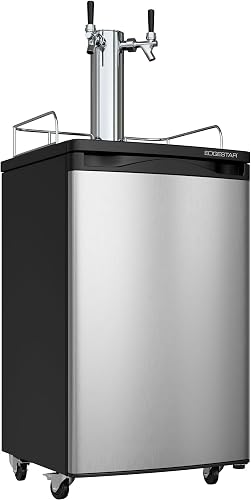
Now and then the unit itself is at fault, and it helps to recognize the signs so you do not keep adjusting something that cannot be fixed by adjustment. A compressor that cannot hold the cabinet near serving temperature, especially in a hot garage or basement, will keep producing foam no matter how carefully you set the pressure, which is why an ambient temperature rating matters when the kegerator lives somewhere warm. A regulator that drifts off its setting or a thermostat that swings wildly is failing hardware, not user error. If you have honestly worked through temperature, pressure, line balance, cleaning and leaks and the unit still cannot keep beer cold and carbonated, it may be undersized for its environment or simply worn out. That is the point to compare a better-built replacement, one with accessible controls, an honest temperature range and a track record of keeping owners happy, against the cost of pouring more beer down the drain. Our kegerator shortlist ranks current picks by spec, price and verified buyer demand so that comparison takes minutes, not weekends.
Frequently asked questions
Why is my kegerator beer so foamy?
Most often the beer is too warm, so its carbonation escapes as foam. Confirm the keg is cold all the way through and steady around 36 to 40 degrees Fahrenheit, then check that the CO2 pressure is not set too high and that the beer line is long enough and not warmed by an uninsulated tower.
Why does my kegerator beer pour flat?
Flat beer is losing carbonation faster than it is being maintained. Nudge the CO2 pressure up to match your serving temperature and give it time to re-carbonate. If it keeps going flat over days and the CO2 empties quickly, look for a gas leak at the regulator, gas line or keg coupler.
How often should I clean my kegerator lines?
Run a line-cleaning solution through the beer lines every couple of weeks of active use, and thoroughly clean the lines, faucet and connectors whenever you change kegs. Skipping it lets residue build up, which sours the flavor and can add to foaming.
Why does only the first pour of the day foam?
Beer left in the line and tower between pours warms up, so the first glass foams while the rest run clean once cold beer refills the line. Insulating the tower line and keeping the cabinet steadily cold reduces that first-pour foam.